Barry Town United: Season 1 vs Season 2 – A Tactical Reset
Season 1 at Barry Town United reminded me of something important: I’ve never seriously claimed to be a tactics expert. I tend to manage by instinct - spotting what looks steady, what looks messy, and hoping I haven’t misunderstood something basic.
But the season made certain things very clear. Not big tactical ideas, just patterns: where the team looked stretched, where the shape broke down, and which areas relied on individual players to stop things falling apart.
Season 2 is my attempt to use those lessons rather than relying on guesswork again.
Season 1
Barry spent most of the season in a 4-1-2-3. It wasn’t chosen for creativity or cleverness - it was chosen because it made sense to the players and kept things at a manageable level. It felt like the safest starting point for a squad still finding its feet.
Season 1: How It Was Set Up

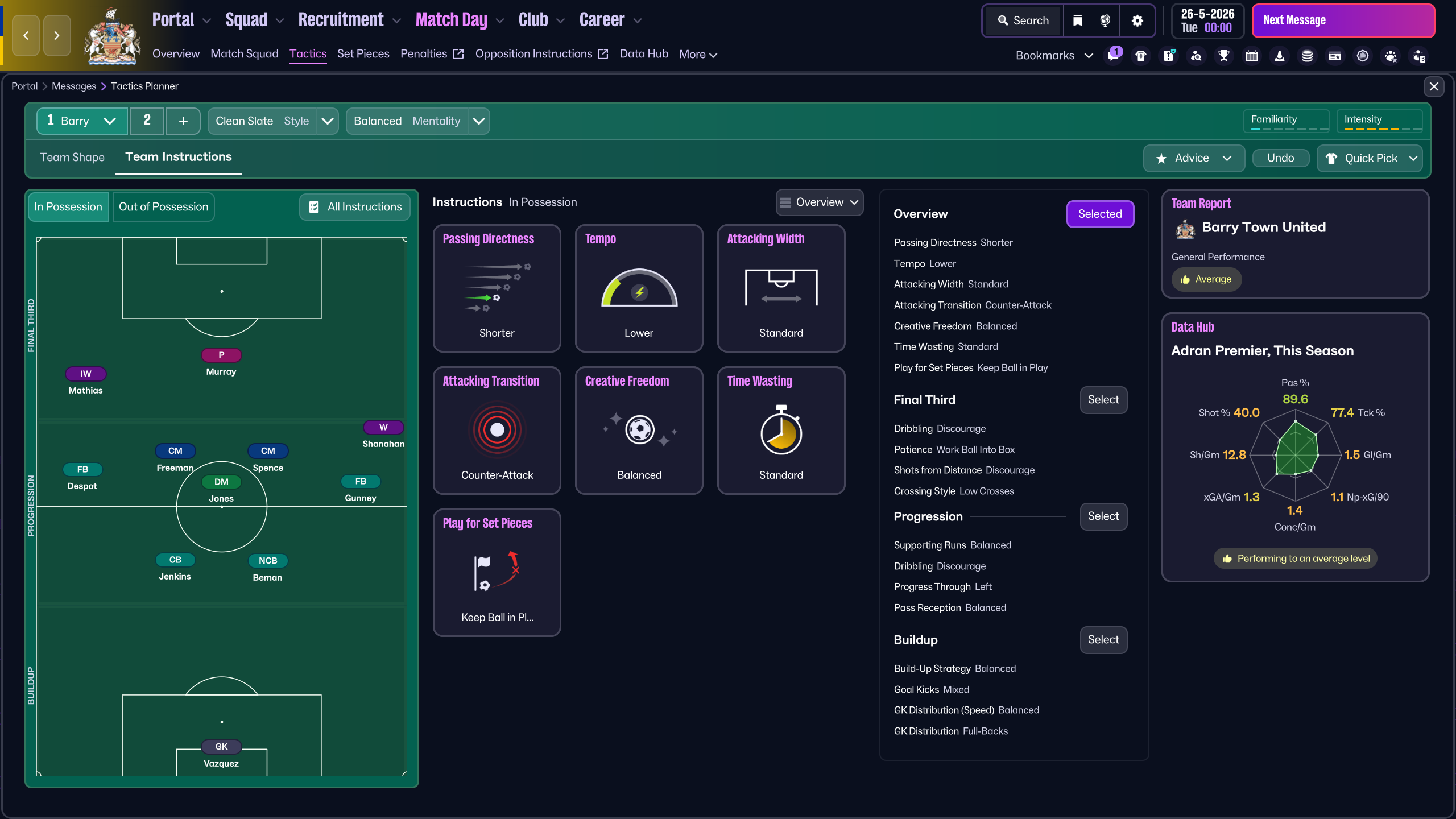
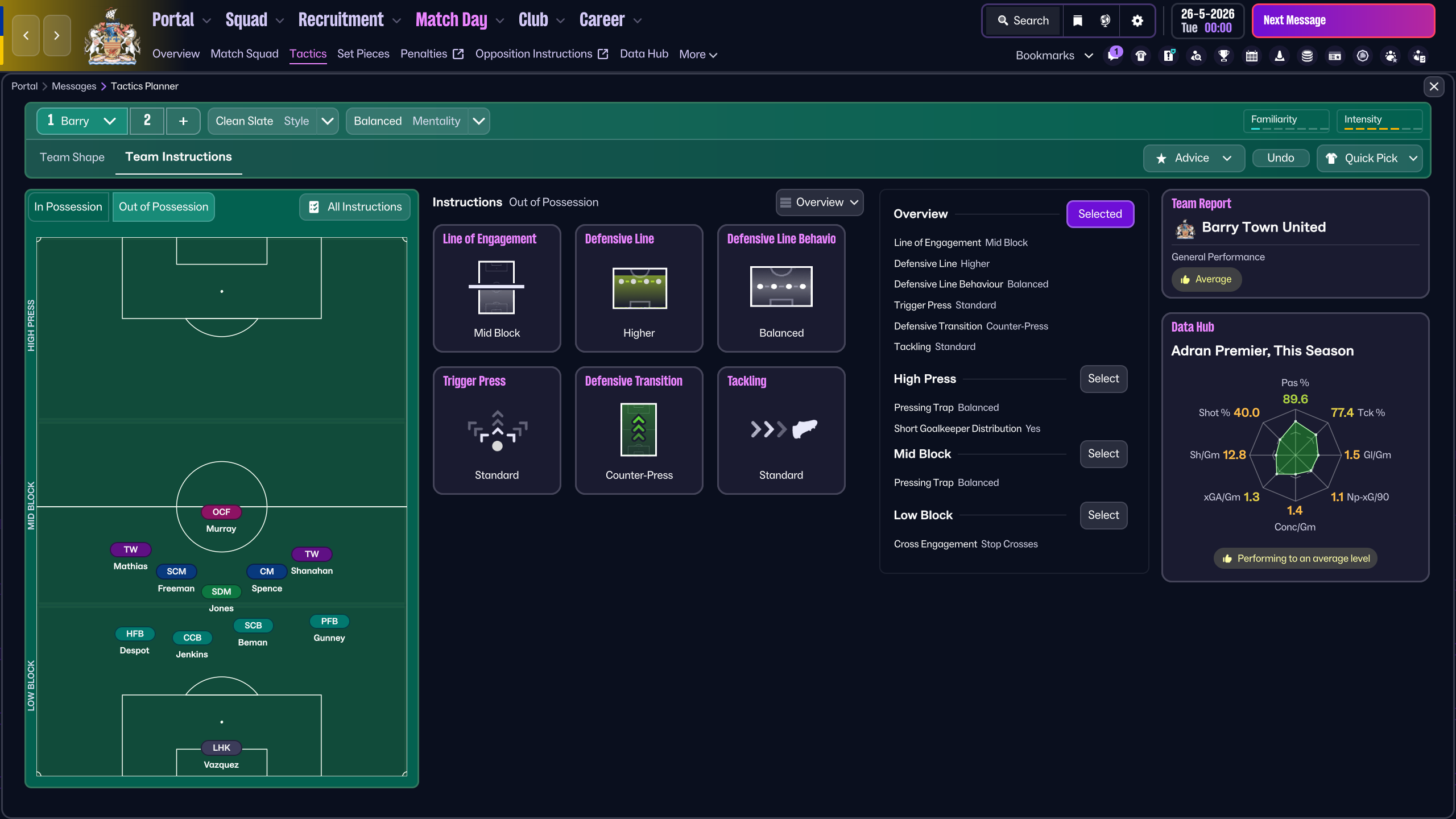
What the Shape Offered
The system created width, simple patterns, and a level of organisation that stopped matches from becoming chaotic. But it also had clear weak points:
- The midfield sometimes drifted apart or struggled to stay connected.
- The right flank needed more structure.
- Transitions exposed the players more than expected.
- The press worked hard but lacked coordination.
It got the team through the season, but it didn’t help them develop beyond coping.
The Players Who Carried the Structure
- Freeman – constantly intervened before problems escalated.
- Arnesen – calm distribution under pressure.
- Shanahan – drove the entire attack.
The system worked because certain individuals made it work.
Season 1 Data Hub
The Data Hub was more useful this season than I expected. I don’t fully understand every chart, but I wanted to check whether performance matched what I thought I was seeing. Most of it did-and the parts that didn’t were even more valuable.
Attackers
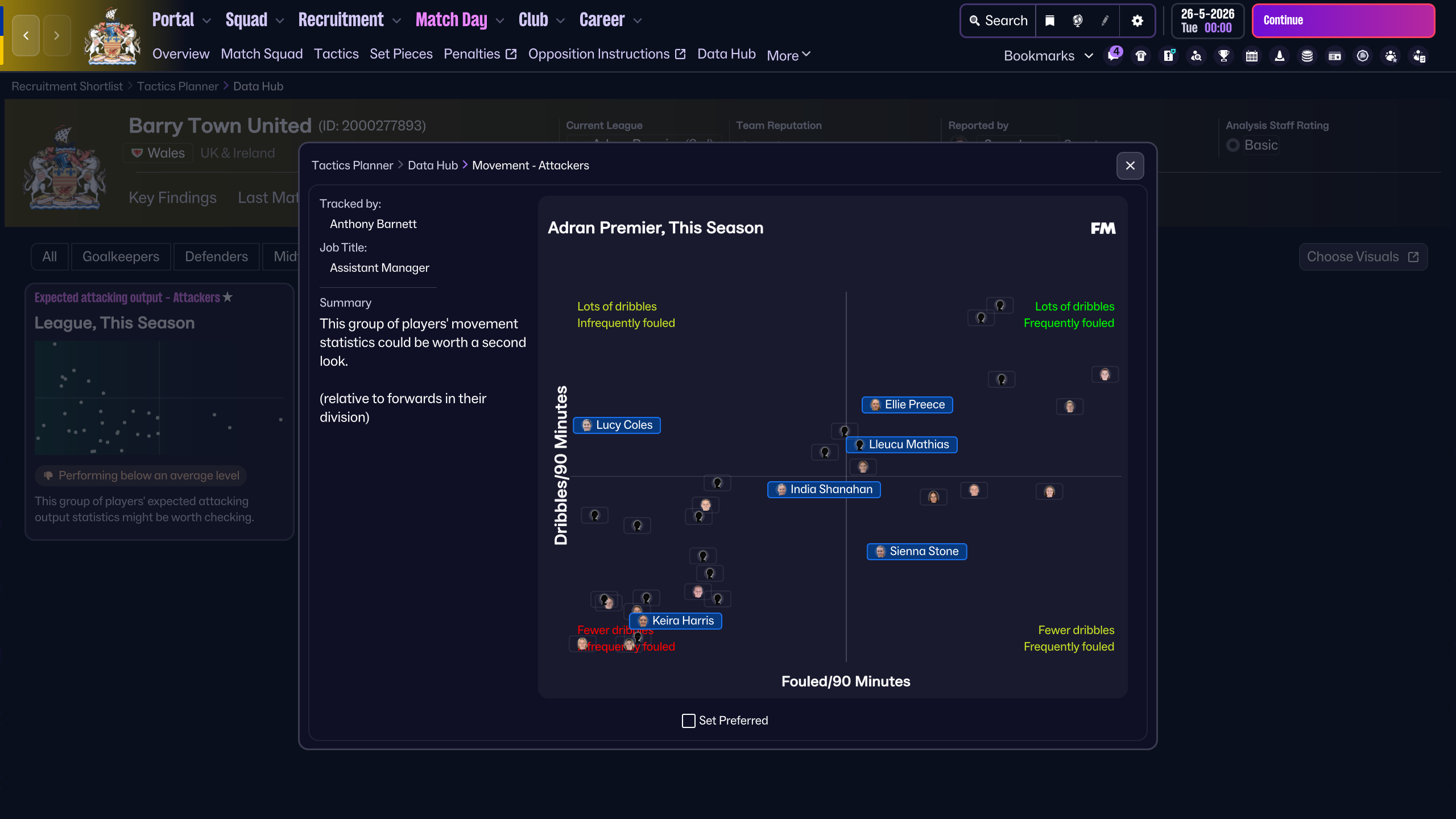
The movement data confirmed that the forwards were willing to run at players and carry the ball, with Preece and Mathias being the most direct options. It showed a front line capable of causing problems, even if the end product didn’t always arrive.
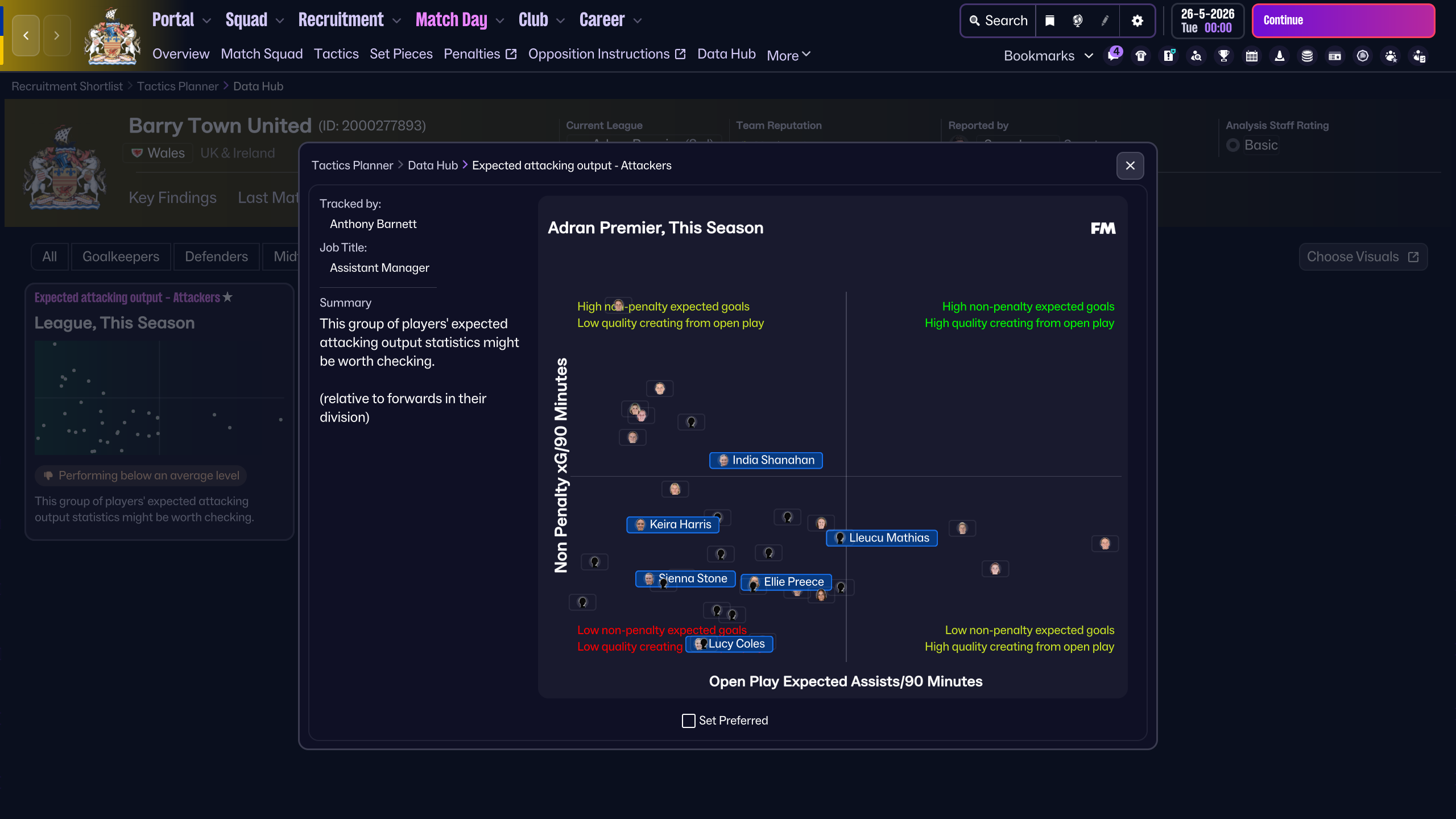
Expected output made the picture even clearer. Shanahan produced far more non-penalty xG than any other attacker, and although Mathias contributed creatively, the overall output was uneven. The attack functioned, but it relied heavily on one player.
Midfielders
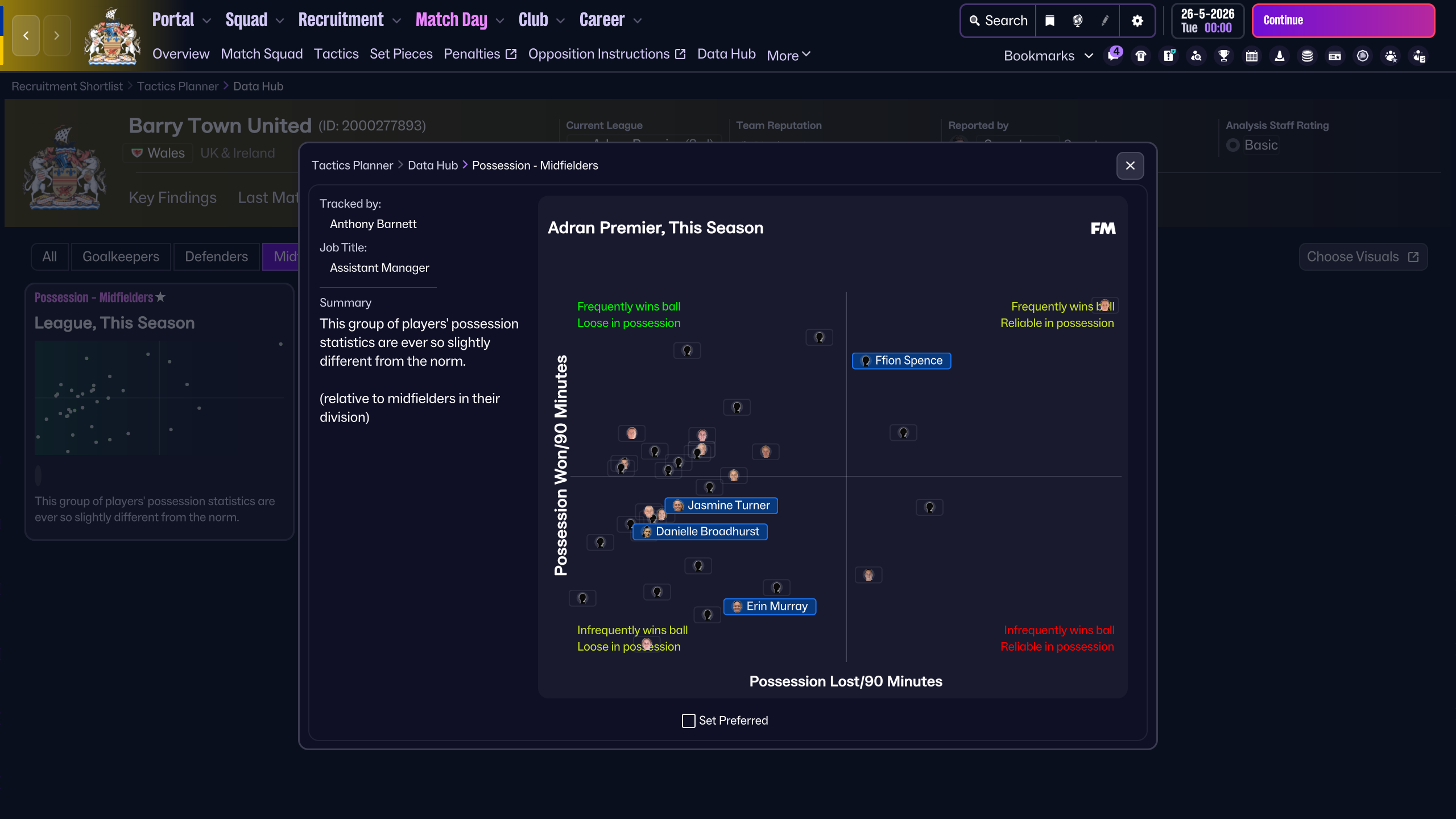
The possession chart explained a lot of what I felt during matches. Spence won the ball frequently. Murray unfortunately lost the ball more than she regained it, while Turner and Broadhurst provided stability without major influence.
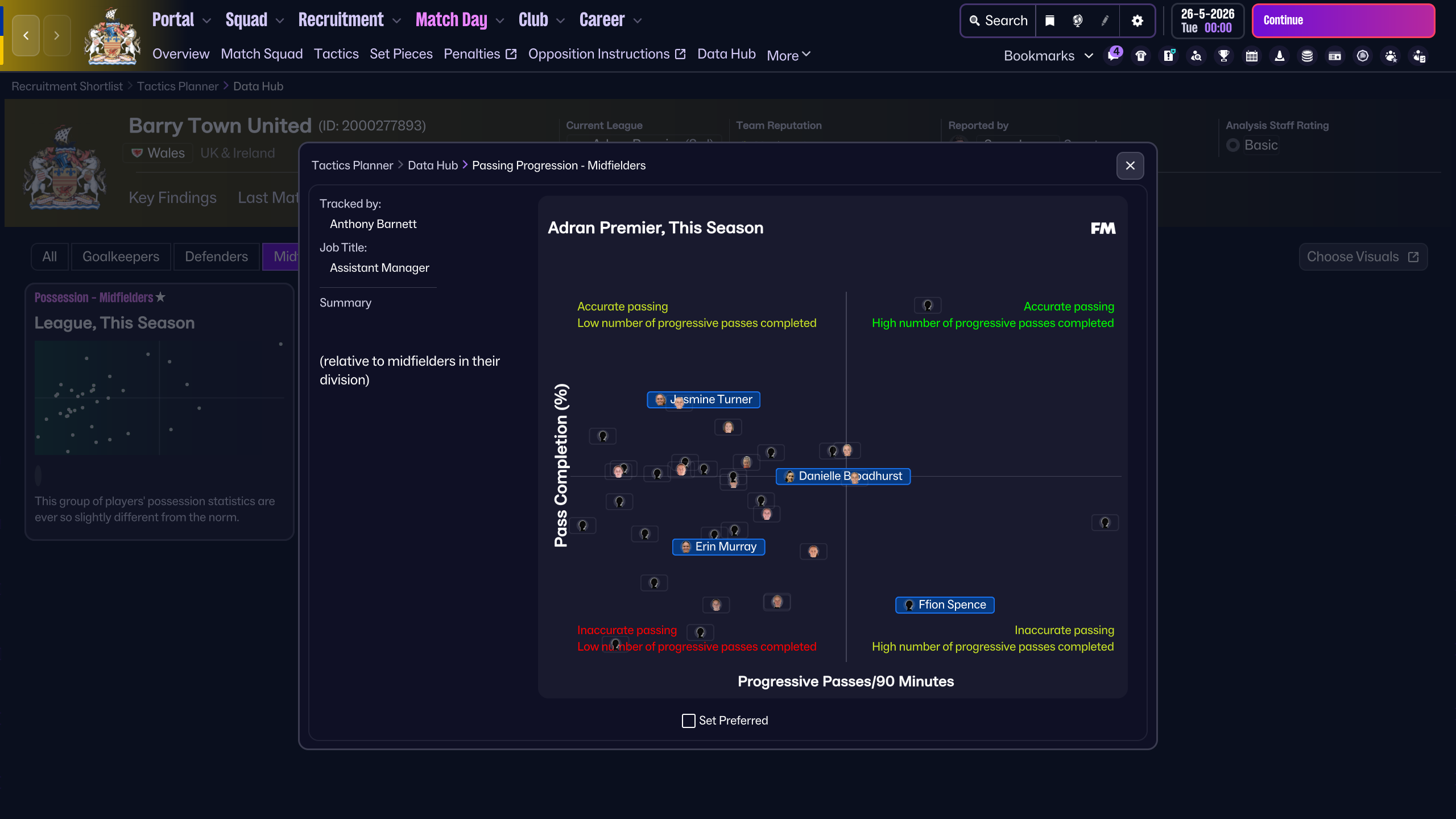
Progressive passing reinforced the same issues. Spence was the only midfielder consistently breaking lines. Turner circulated the ball safely but not aggressively. Murray struggled to progress play. Without a natural link between defence and attack, the team often bypassed midfield or became stretched.
Defenders
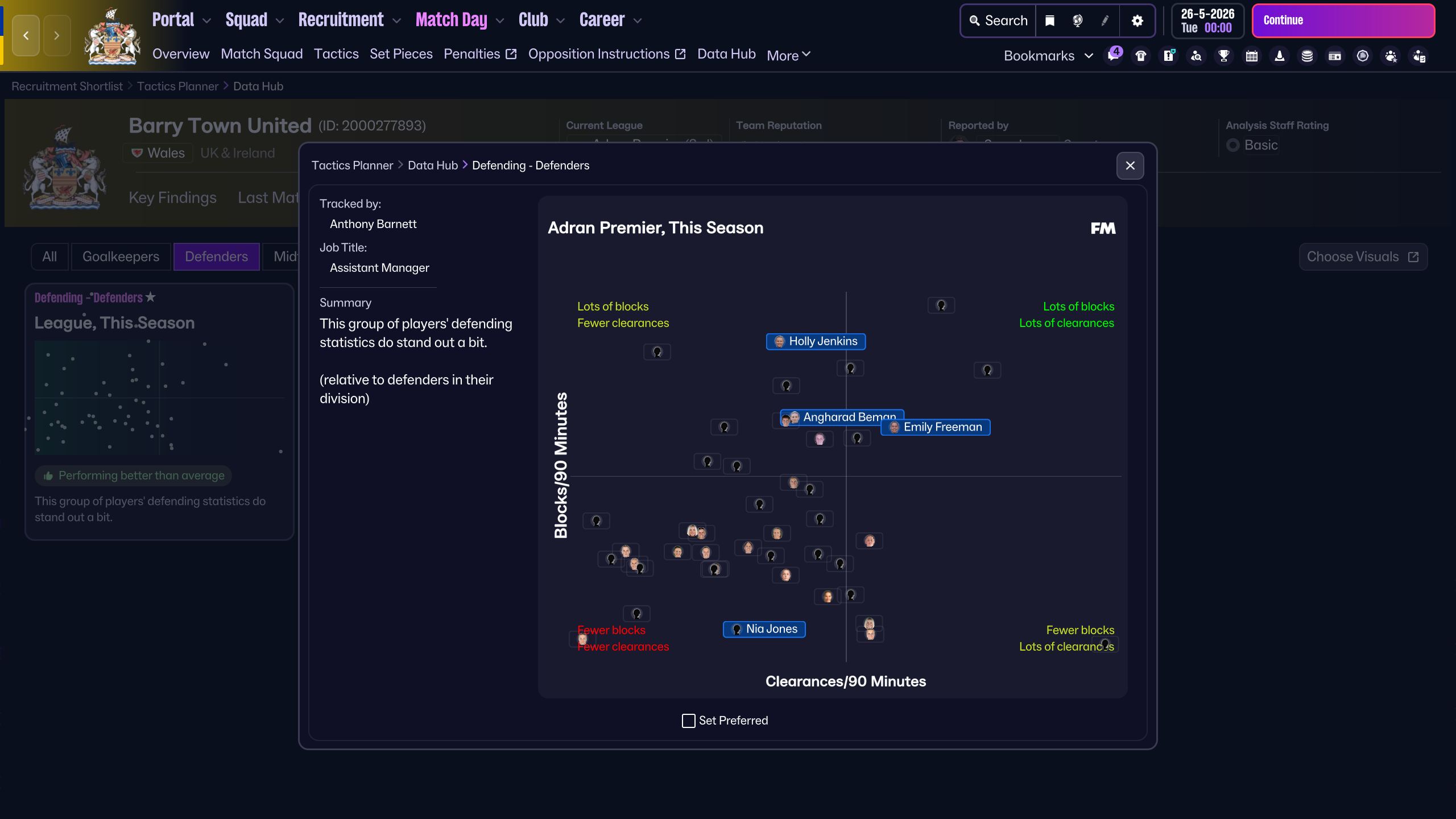
Blocks and clearances were high across multiple defenders. Jenkins, Beman, and Freeman all showed strong defensive involvement. But high numbers like this usually mean the team is defending longer or deeper than intended.
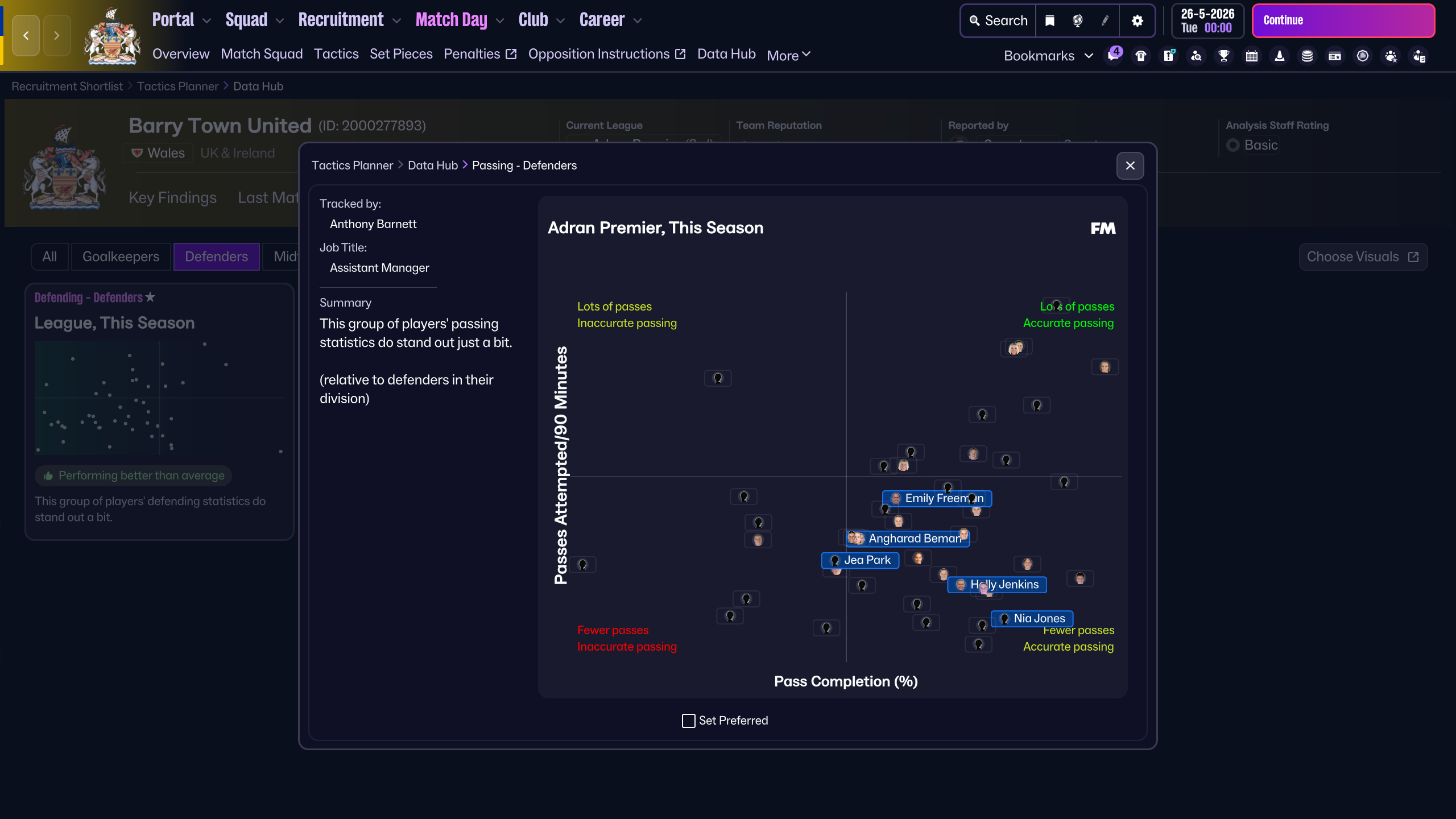
Passing data for the back line was one of the positives. Freeman played a major role in build-up with solid accuracy. Park and Beman supported reliably, and Jones kept things simple.
but the structure ahead of them needs to reduce their workload.
Season 2
This season is the first time I’ve tried to be proactive instead of reactive. Rather than waiting to see what breaks, I’ve tried to build something that reduces strain on individuals and supports the way the squad naturally plays.
Issues That Needed Addressing
- A natural defensive midfielder to stabilise transitions.
- A right side that stays connected during build-up and defensive phases.
- A centre-back partner who allows Freeman to share responsibility.
- A winger capable of calmer, more secure decisions.
- A striker whose movement creates space rather than collapsing it.
New Signings and Their Roles
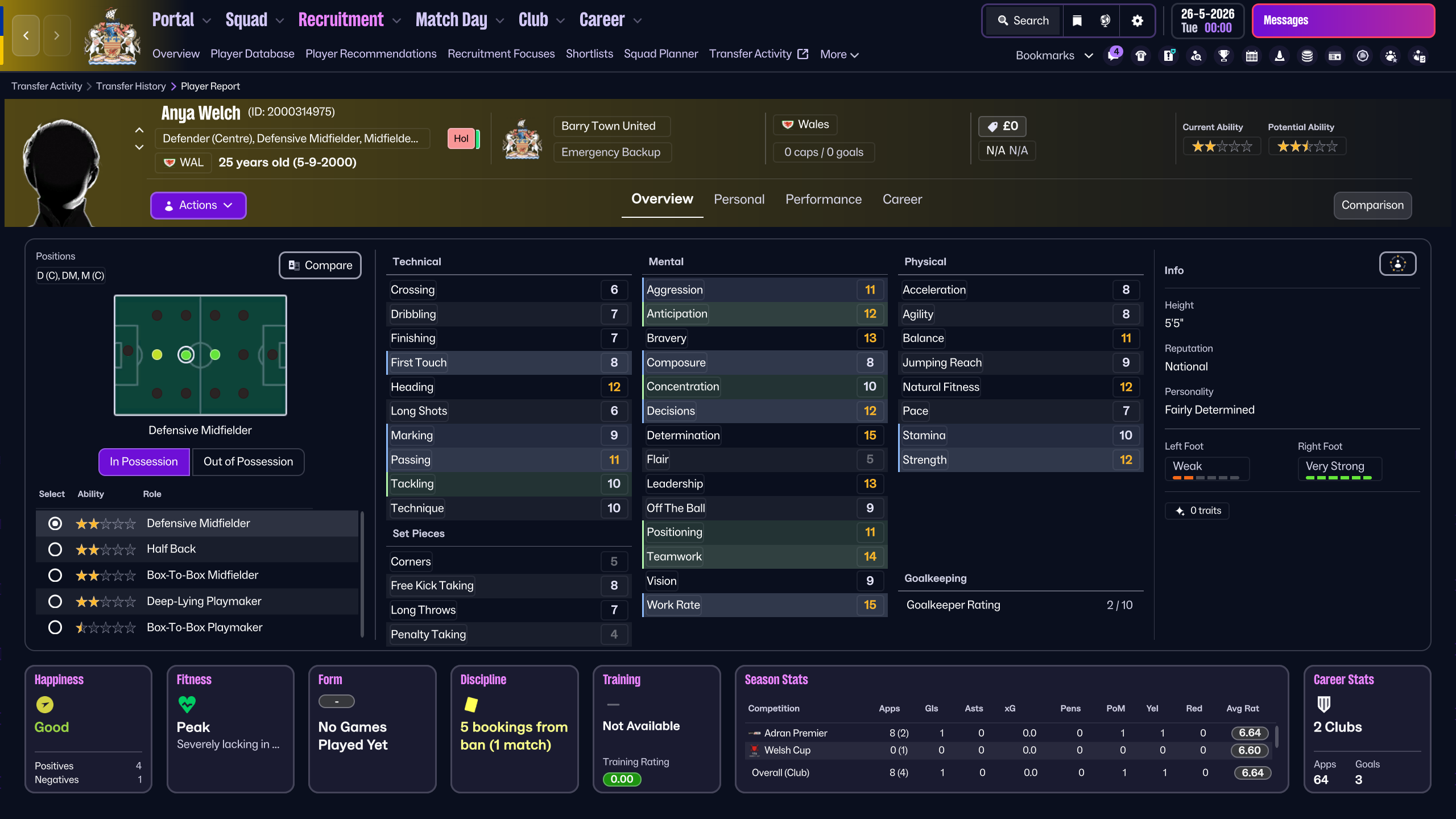
Welch (DM)
Provides structure in midfield and helps stop transitions early.
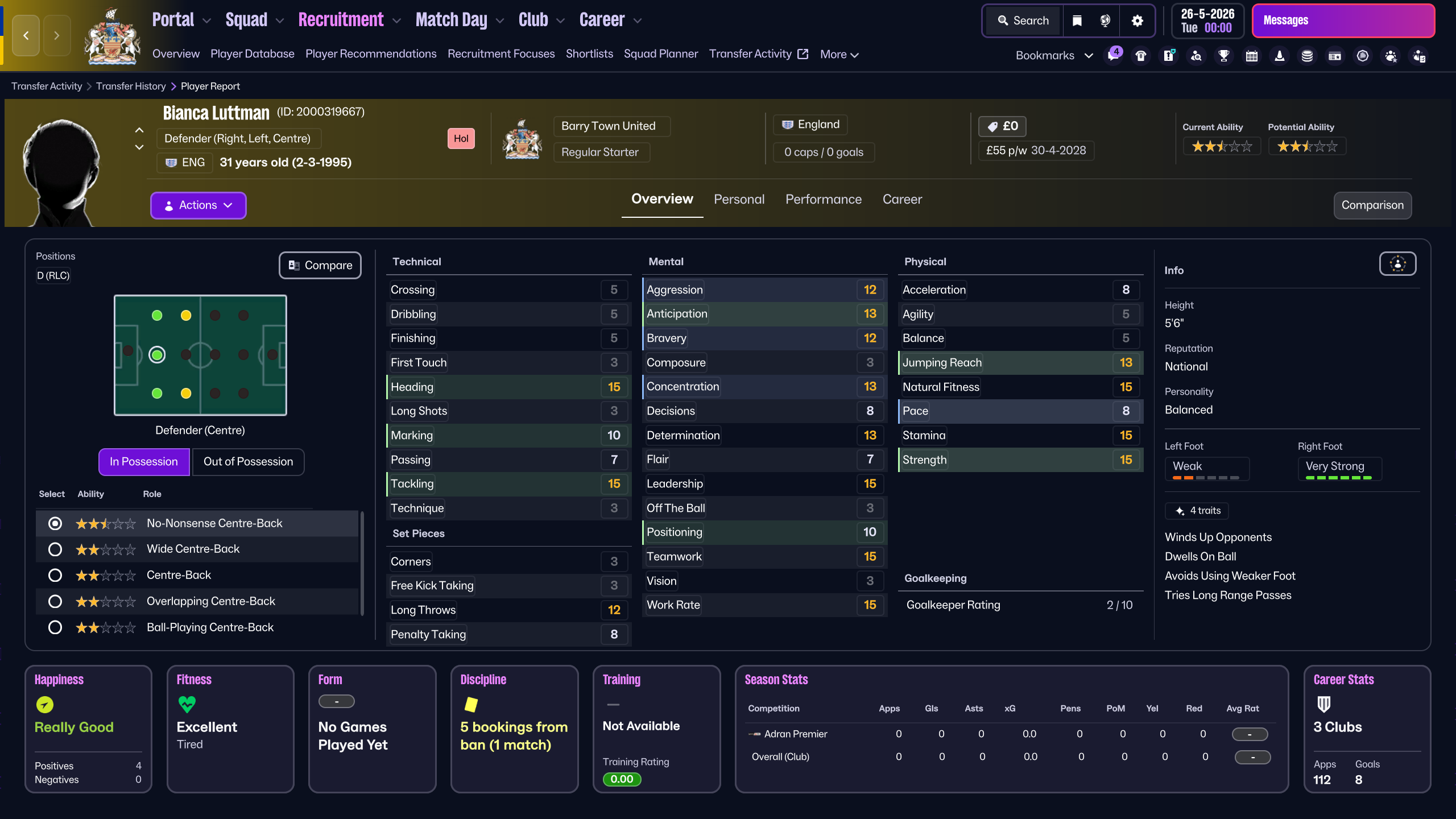
Luttman (CB)
Calm, steady centre-back who gives the defence more control.
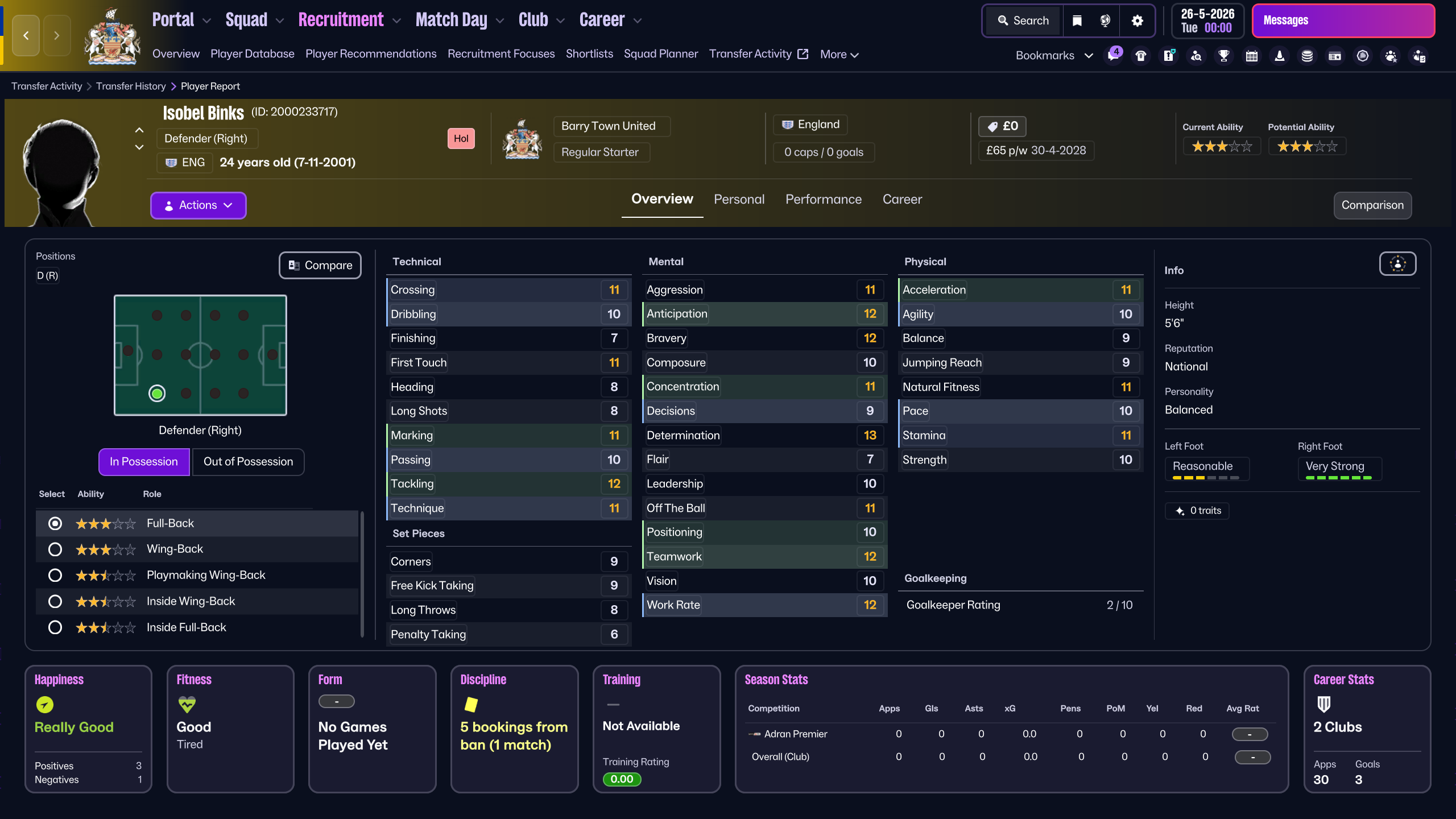
Binks (RB)
Reliable right-back who gives the flank more stability.
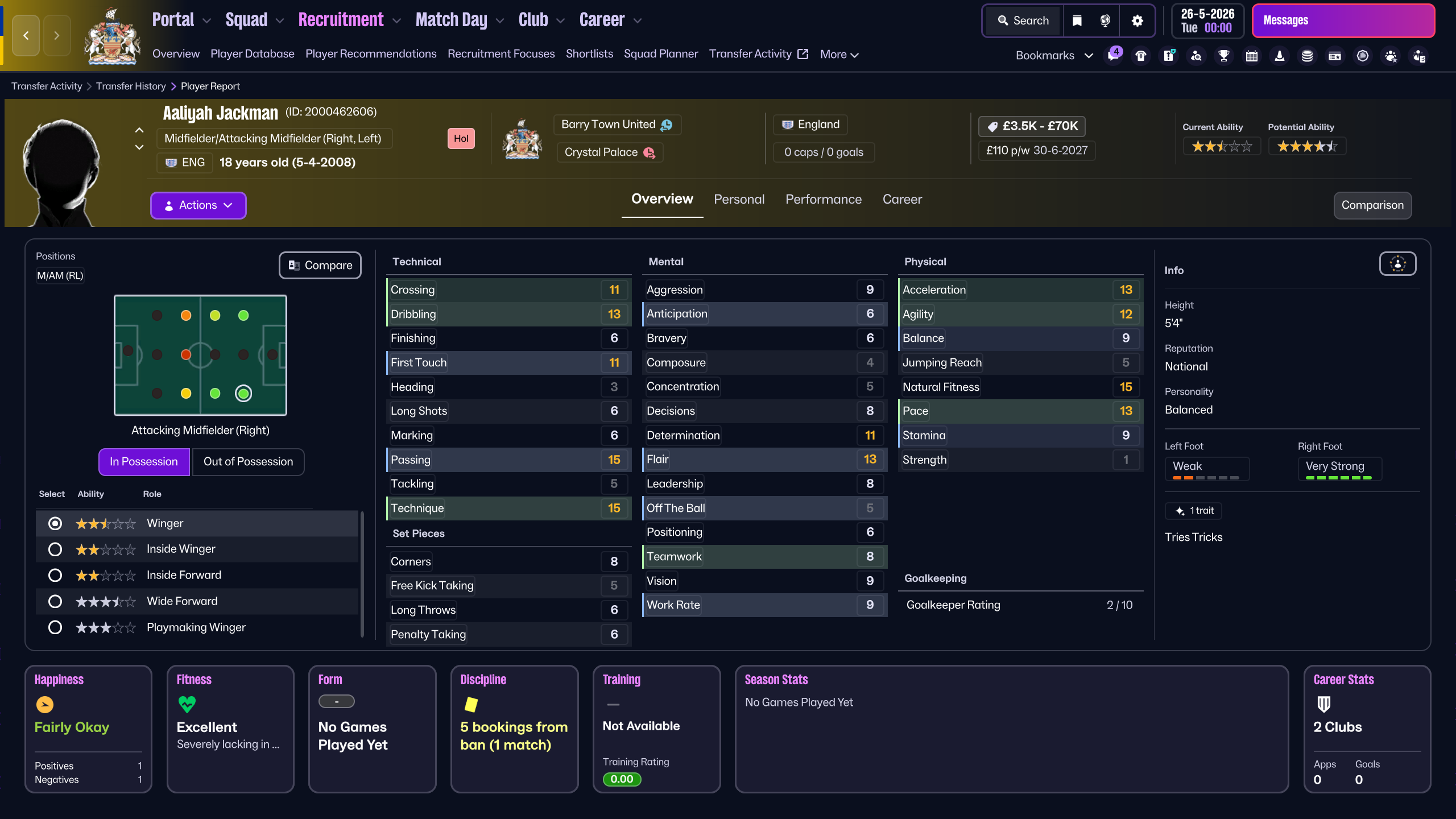
Jackman (Winger)
Safer wide option who improves ball retention on the right.
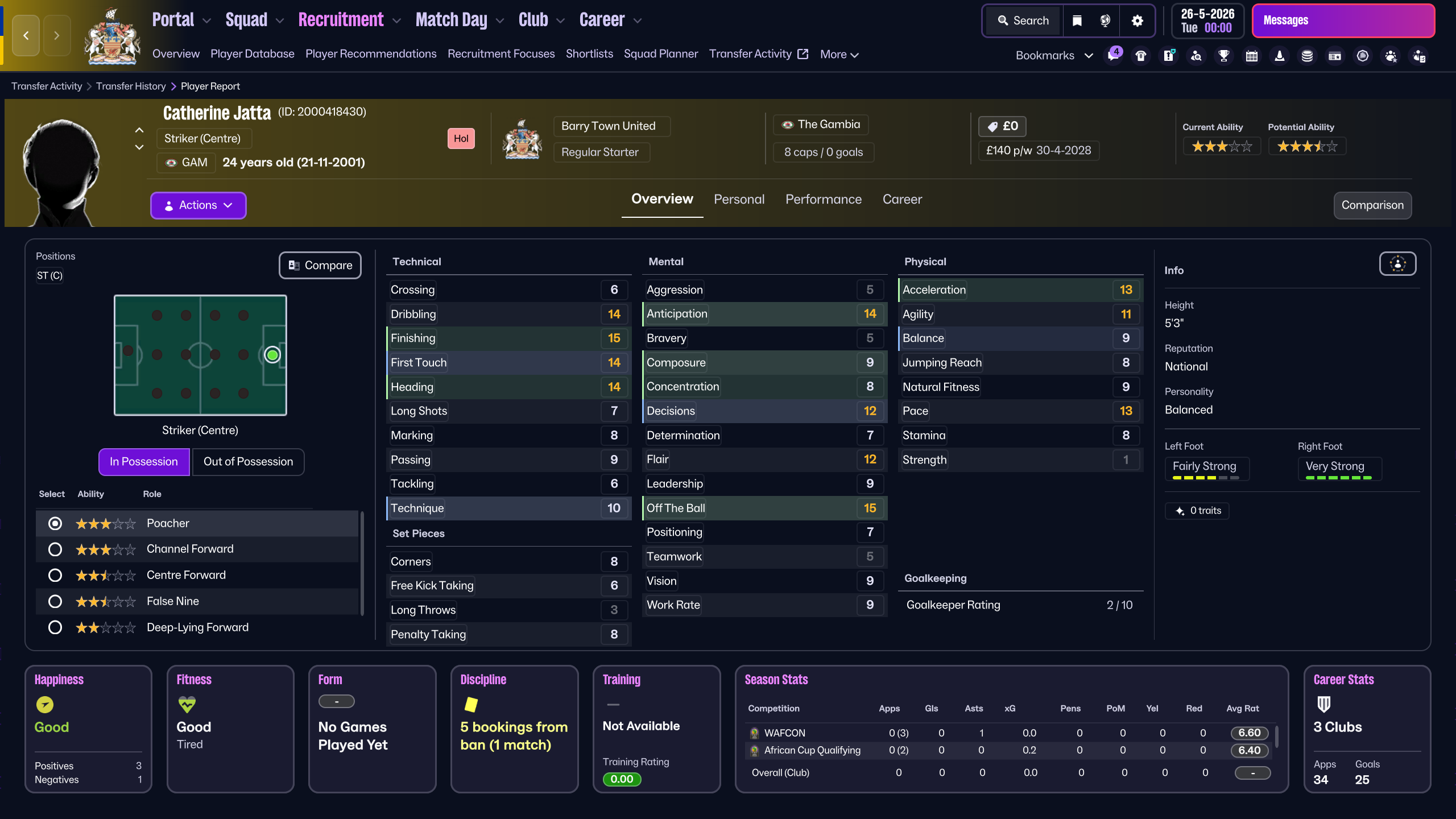
Jatta (ST)
Better movement, gives the team depth, links play more naturally.
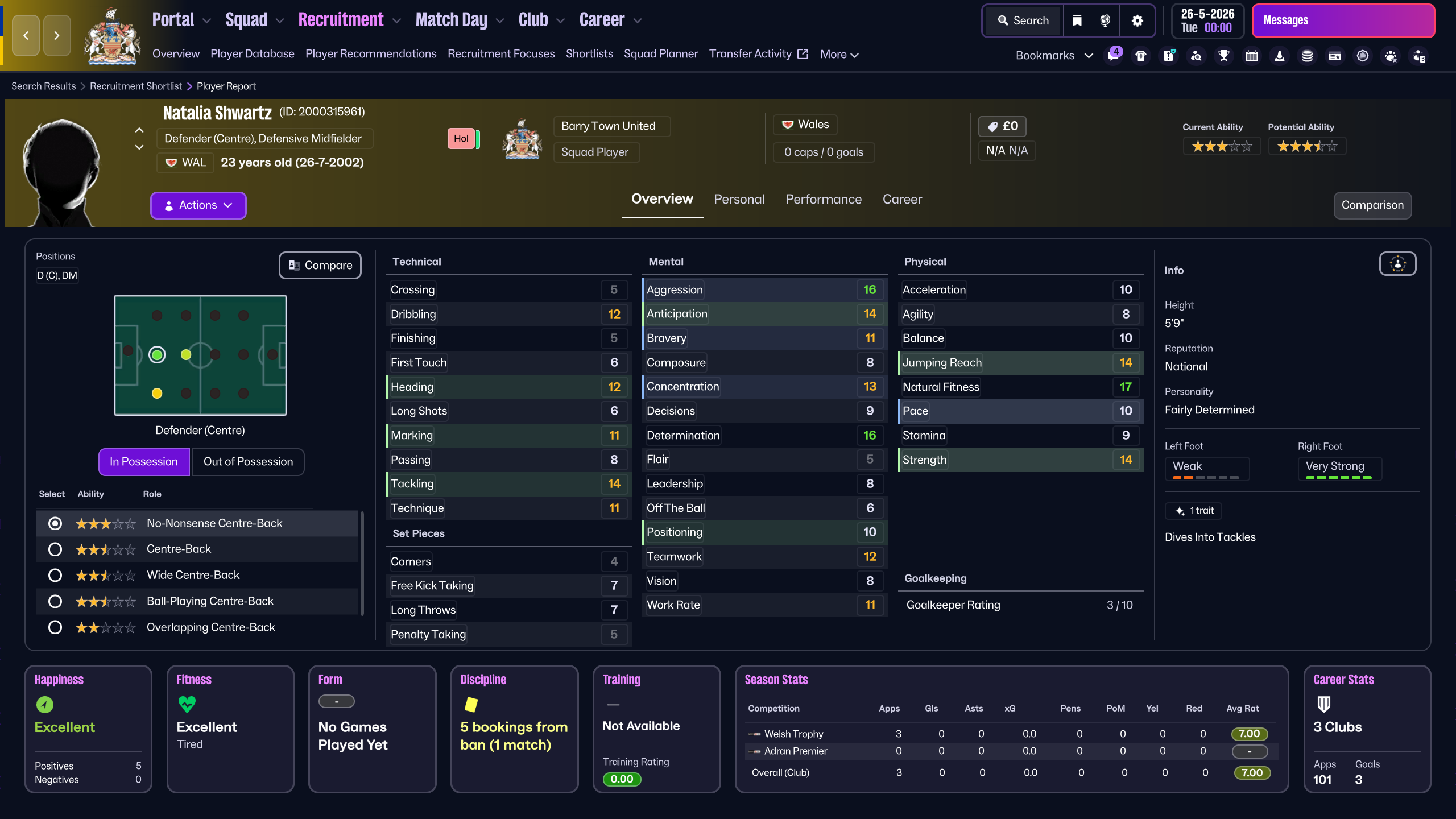
Shwartz (CB / DM)
Strong ball-winner who can play centrally and protect the back line.
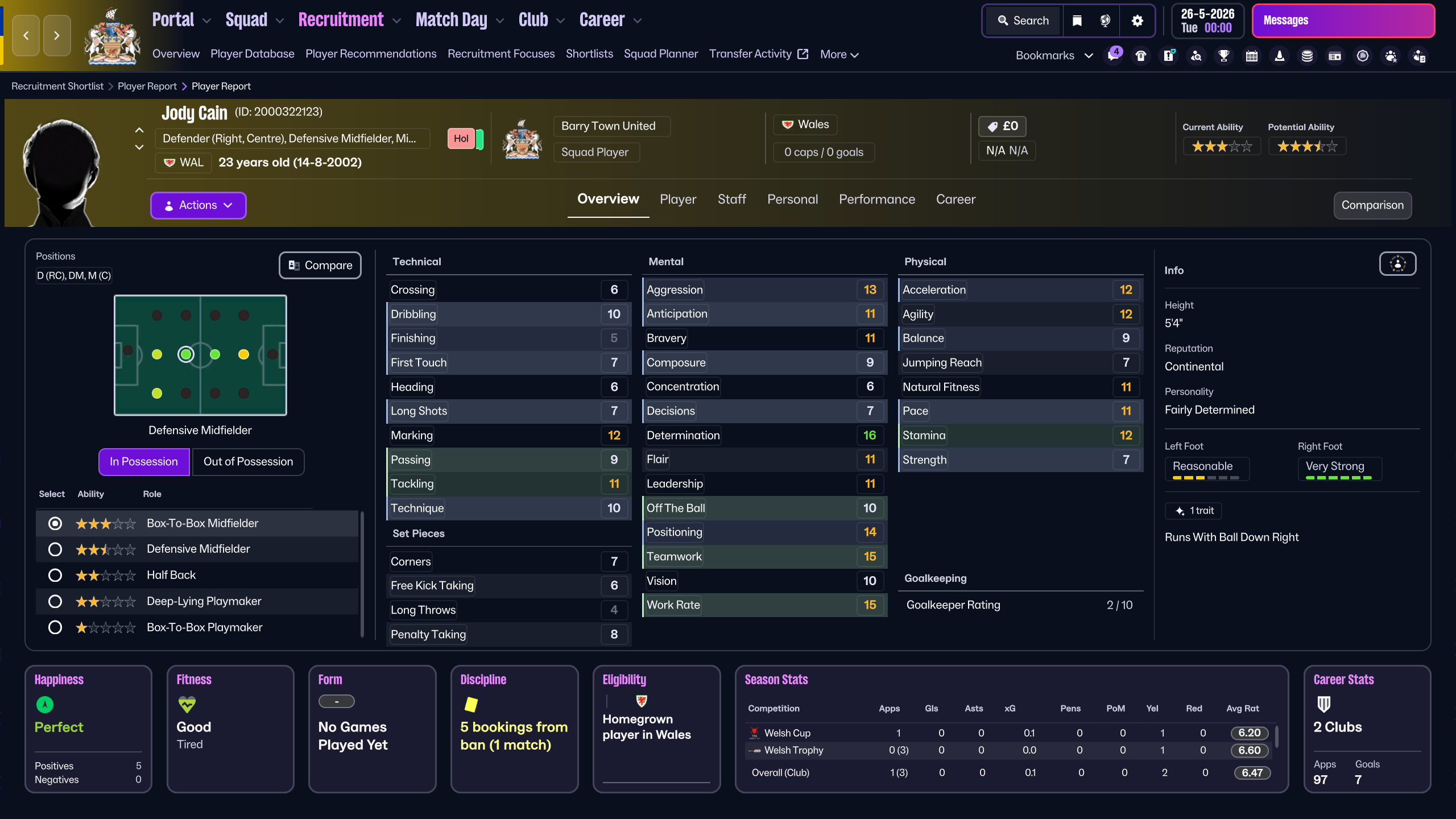
Cain (DM / MC)
Hard-working midfielder who keeps things simple and covers space well.
Season Comparison
The biggest shift from Season 1 to Season 2 is structural.
Here’s how things should feel different:
| Season 1 | Season 2 (Plan) |
|---|---|
| 4-1-2-3 that stretched easily | 4-3-3 with stronger connections |
| Large gaps in midfield | Welch stabilising central spaces |
| Right side inconsistent | Binks + Jackman providing balance |
| Freeman overloaded | Responsibility shared with Luttman |
| Attack reliant on Shanahan | More variety and support in forward areas |
It’s theory for now, but it’s the clearest plan the squad has had since I arrived.
The New 4-3-3
The new 4-3-3 isn’t complex. It’s simply better suited to the players available. It offers clearer spacing, closer support in midfield, and fewer situations where individuals are left isolated.

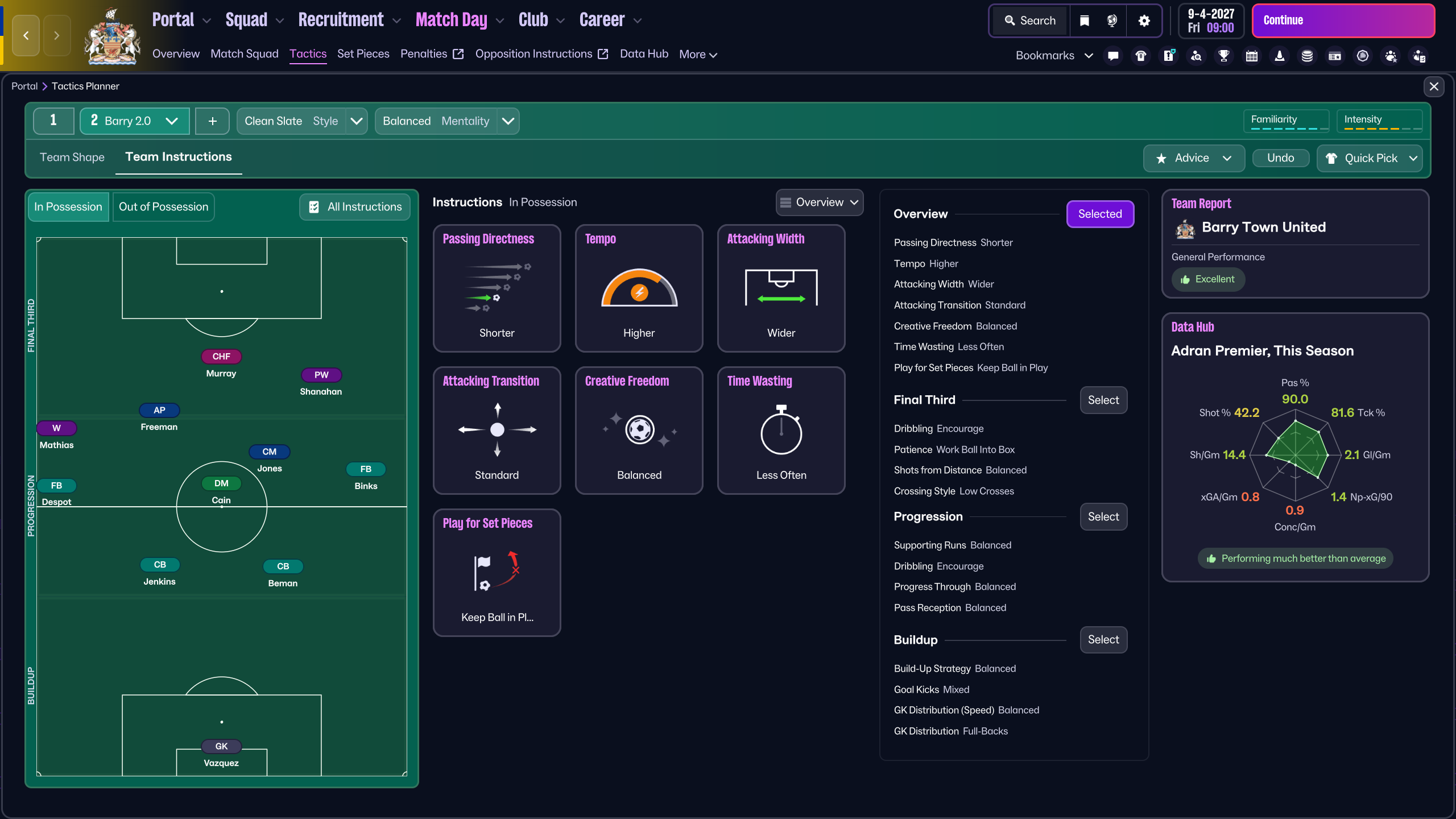
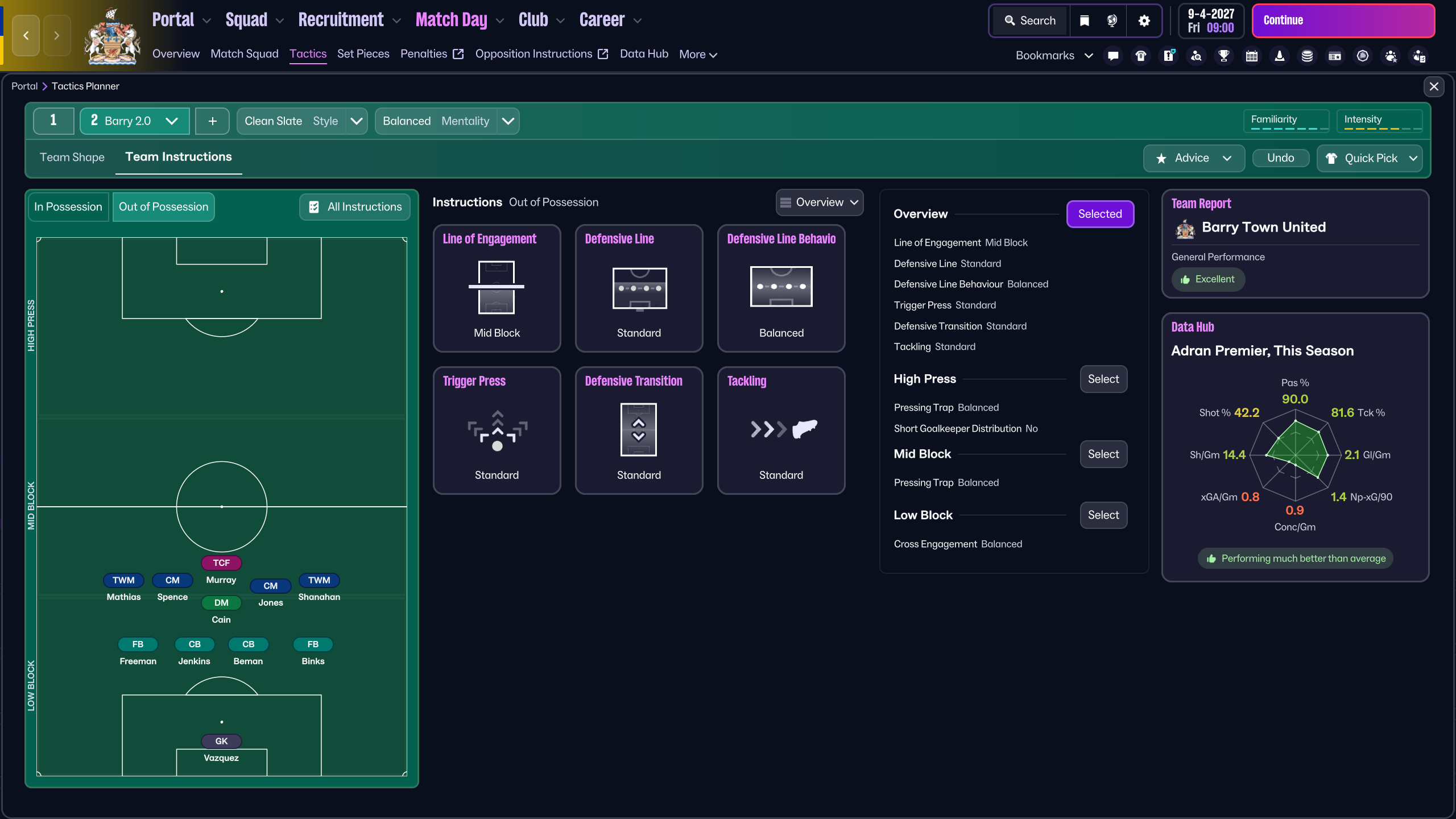
What the System Should Provide
- Short, steady passing options in all thirds.
- Higher tempo once the ball is secure.
- Low crosses and cutbacks that suit the attackers.
- Full-backs supporting without overextending.
- A midfield unit that stays compact and connected.
Defensive Goals
- A mid-block that reduces space between lines.
- A defensive line that avoids unnecessary risk.
- More coordinated pressing rather than individual chases.
- Welch stopping transitions before they become dangerous.
Whether it works as intended is something we’ll find out when the season starts.
Final Thoughts
I’m still learning what good tactical structure looks like and how to make adjustments in real time. But Season 1 showed exactly where the team struggled, and Season 2 is the first time I’ve tried to build something that reduces those issues instead of reacting to them.
The aim isn’t to master tactics - it’s simply to understand them well enough to give the players a system they can grow inside. If that leads to more consistent football and fewer chaotic performances, then it’s already a step forward.