Non League Manager is now in Early Access.
I've actually had a little head start with this one, having been invited to play the beta before today's Early Access release. So while I wasn't jumping into Non League Manager for the first time today, this feels like a good point to properly talk about what I've seen so far and, more importantly, what the game is actually trying to do.
This isn't a final review.
NLM has entered Early Access today, and my impressions come from the beta build I was given access to before release. The game is still being developed, so I'm looking at what NLM is offering now rather than treating this as a verdict on the finished game.
And after spending time with the game, one thing became clear quite quickly.
NLM isn't trying to be Football Manager.
That's not a criticism. In fact, I think understanding that is probably the key to understanding NLM.
The first thing that stands out about NLM is how straightforward everything feels. From the screens I've experienced during playing, the game generally gives you the information you need without making you dig through layer after layer of menus before you can actually make a decision.
Football Manager is brilliant, but the sheer amount of information in the game can sometimes be overwhelming. You can open the game planning to play a couple of matches and, three hours later, you're sat with a notebook making a training plan for your under 21 team.
NLM takes a different approach. The game focuses on the core parts of being a football manager without asking you to manage absolutely everything surrounding the football club. You still have your squad, tactics, training, recruitment and matches, but the experience feels much more streamlined.
That simplicity is especially important for a game focused on non-league football. You're not walking into a Premier League club with an army of staff and a huge transfer budget. You're managing with limited resources and limited players.
NLM understands that and, at least from what I've played so far, doesn't seem interested in adding complexity just for the sake of saying the game has more features.
Squad Overview
Before you start looking for new players, Non League Manager gives you a pretty useful overview of the squad you already have. The squad screen puts the important information into one table.
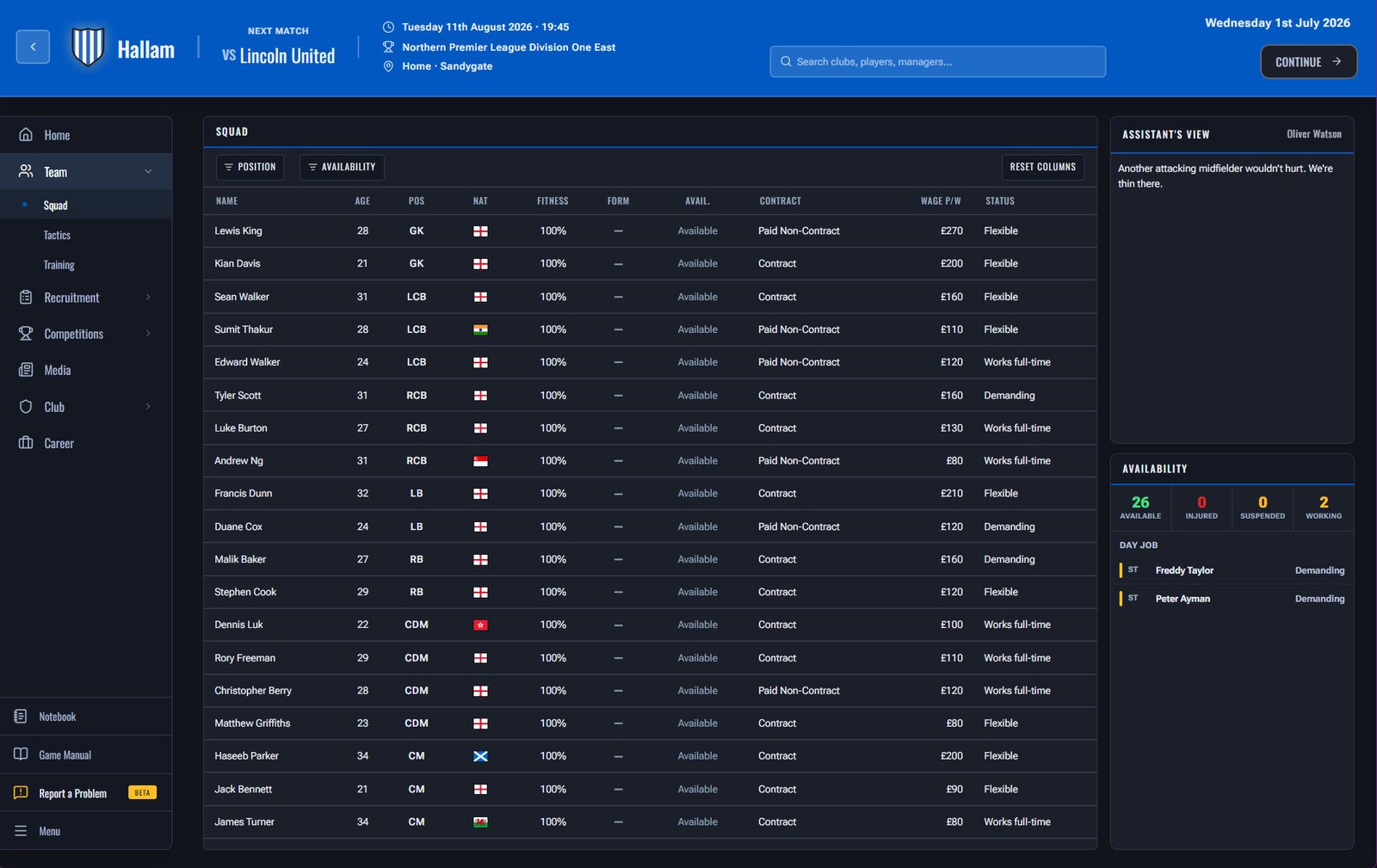
There's also some useful detail on the right-hand side. The game shows how many players are available, injured, suspended or working, while players with day jobs are listed separately.
That last part is a nice reminder of the level you're managing at. Two of Hallam's players are currently marked as working, these aren't full-time professional footballers whose entire week revolves around training and matches. They have lives and jobs outside the club, and NLM actually makes that part of the squad visible.
Player Profiles
Player profiles follow a similar approach. You can see the important information about a player, while their attributes give you a clear idea of where their strengths and weaknesses are.
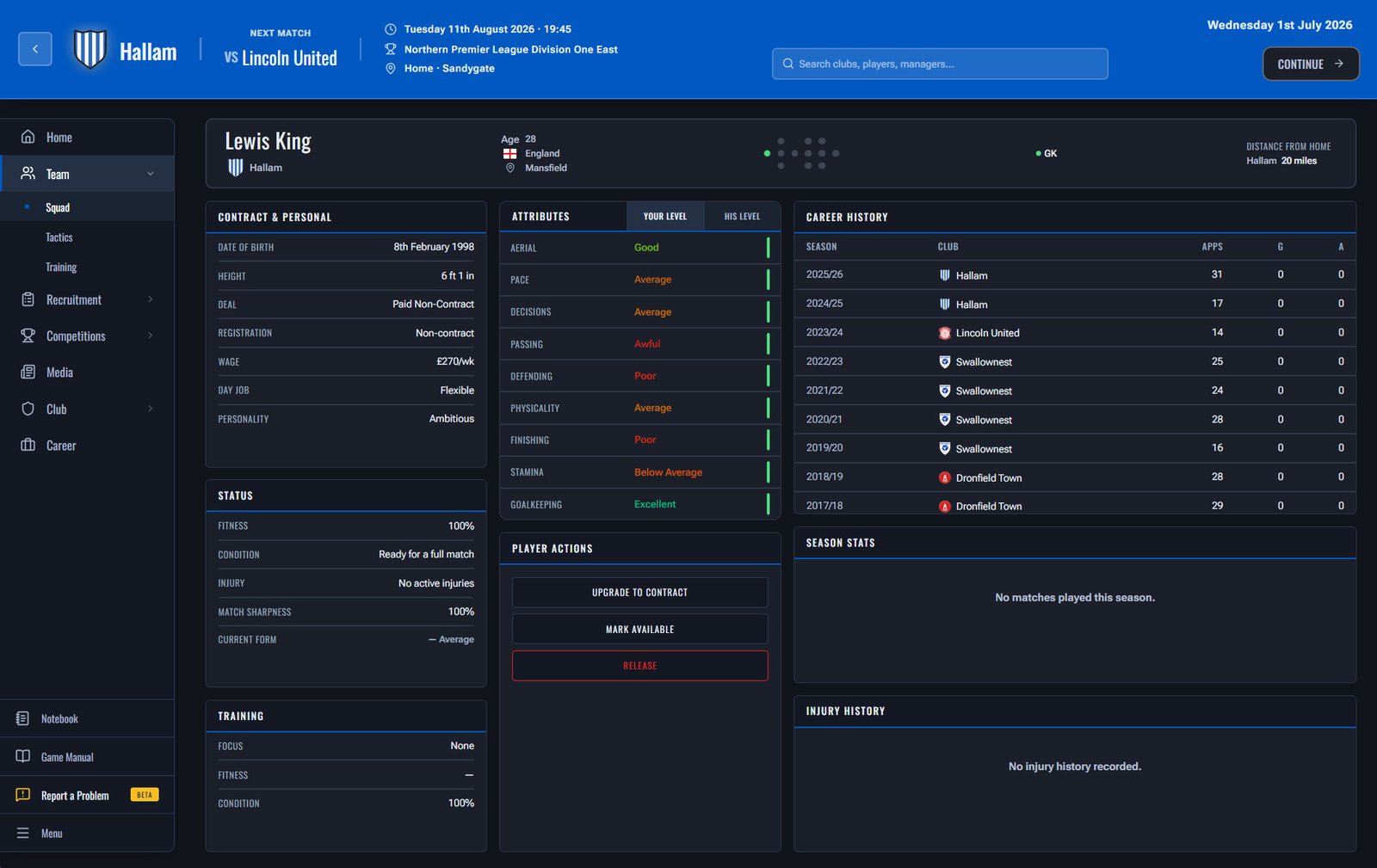
What I particularly like is that the attributes are presented in a way that is easy to read. You aren't necessarily staring at endless rows of numbers trying to work out whether a player is actually useful.
Aerial ability might be good. Passing might be awful. Goalkeeping might be excellent. That's exactly enough information to tell me whether someone should be starting between the posts or attempting a thirty-yard through ball.
Starting XI
Choosing your team for the next match is exactly the sort of thing you'd expect from a football management game, but NLM keeps the process nice and simple. You're presented with the squad available to you, the formation you're using and the players you've selected, with the pitch giving you a quick visual overview of how everything fits together.
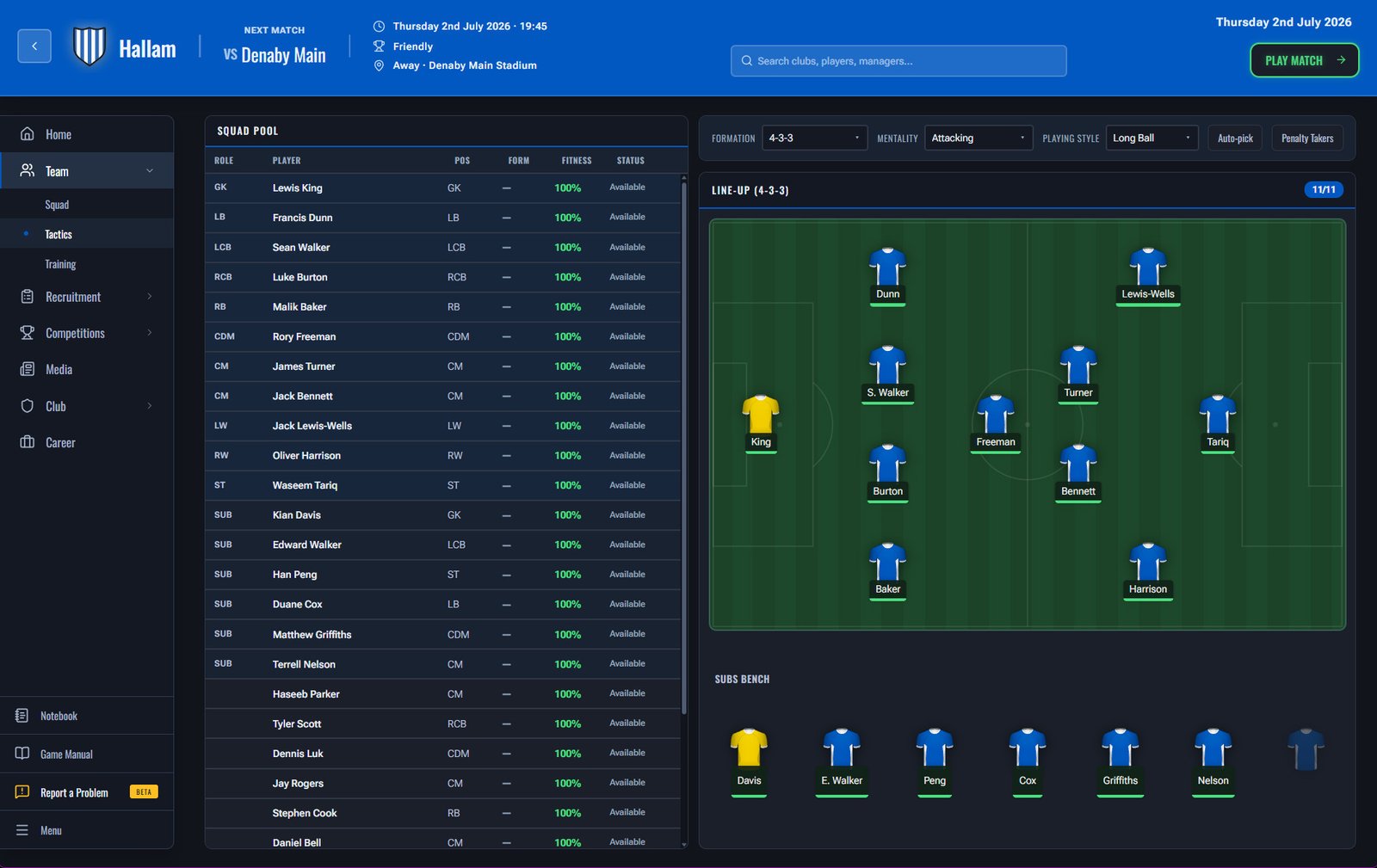
You can select your formation, choose your mentality and set your playing style before arranging your players on the pitch.
You aren't drowning in instructions. You aren't assigning roles to every player. You aren't spending twenty minutes deciding whether your left-back should overlap, invert and do a cartwheel before passing the ball backwards.
You pick your players, decide how you want the team to play and get on with it. For NLM, that feels like the right level of detail.
Training
You can choose the areas you want the team to work on, including attacking play, defending, fitness, set pieces and team shape. Each area gives you a simple explanation of what the work is meant to improve, while the overall training screen gives you a quick view of the quality of your current setup.
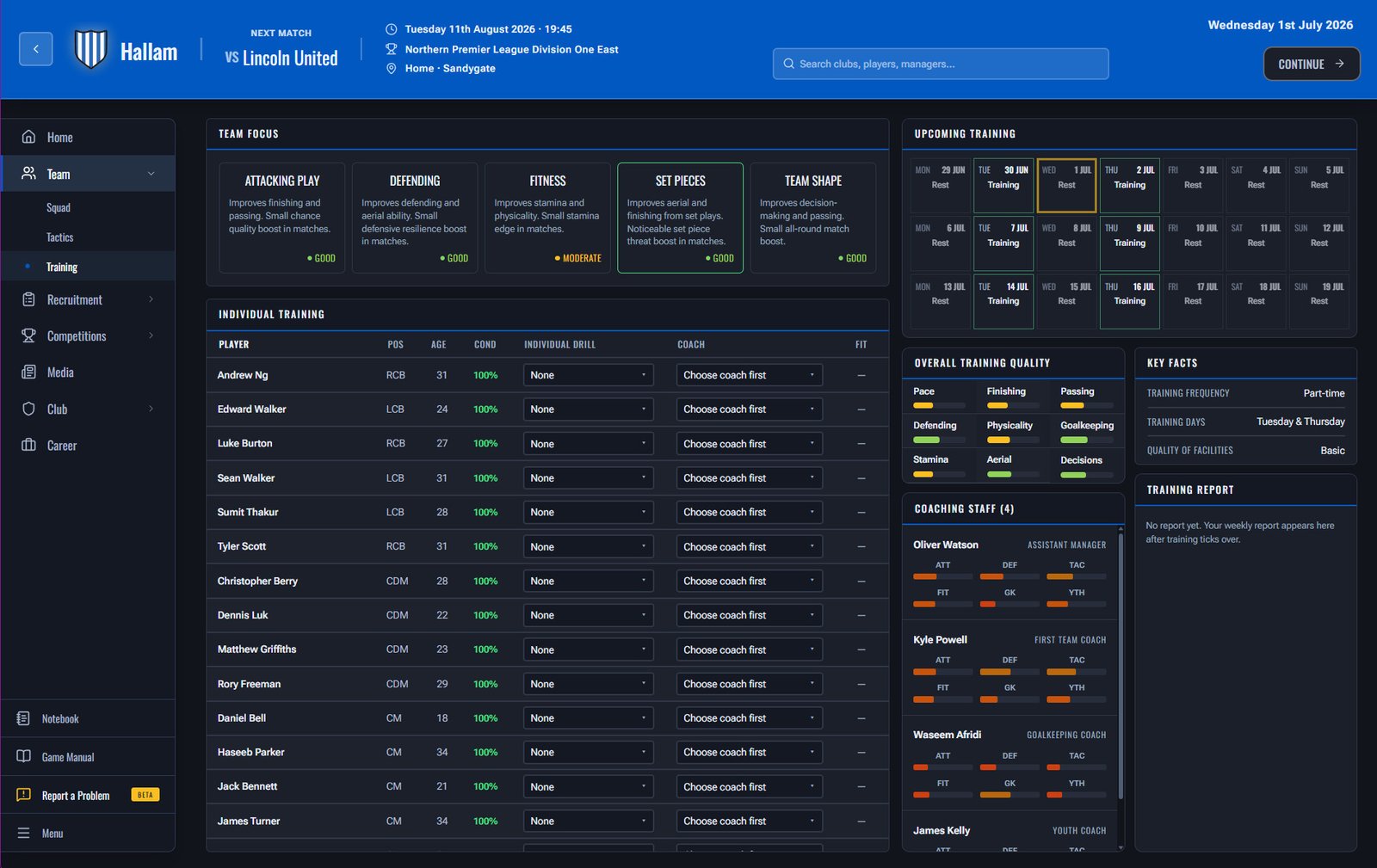
Individual training is also included, allowing you to set specific drills for players and assign coaches. You can see player condition, fitness and the available coaching staff, so there is still a clear sense that your decisions are affecting the squad.
And honestly, I appreciated that. Sometimes I want to manage a football team. Sometimes I don't want to need a coaching qualification to actually understand what I've clicked.
Finances
One of the things that becomes obvious pretty quickly at this level is that building a squad isn't just about finding players you like. Someone has to pay for them.
NLM gives you a clear look at where the club's money is coming from and where it's going. The finances screen breaks income down into things such as season tickets, sponsorship and merchandise, while the outgoing side covers wages, staff wages, running costs, maintenance and even your own manager pay.
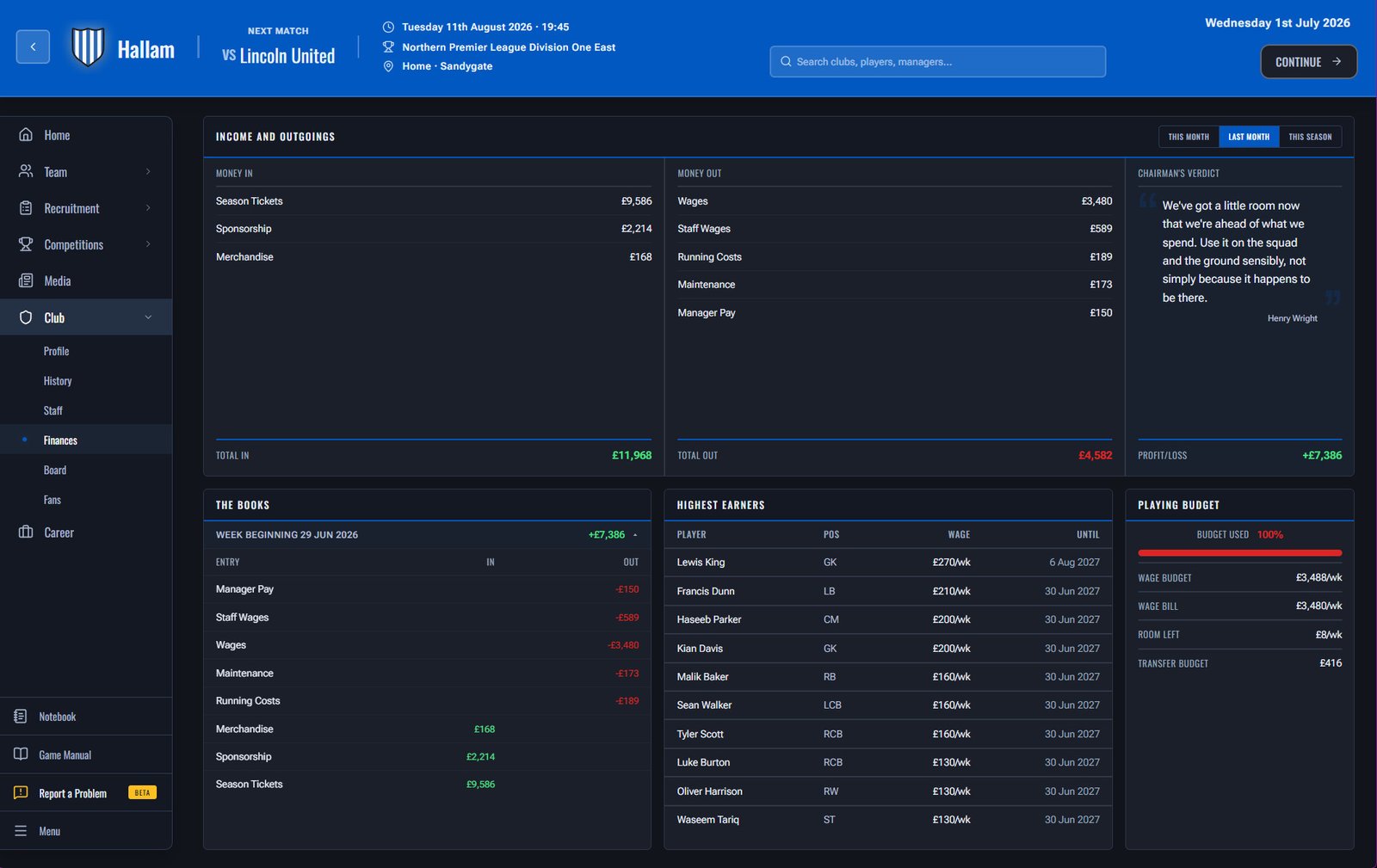
The numbers also give you a much better idea of the scale you're working with. Hallam have brought in £11,968 across the selected period, while spending £4,582, leaving a £7,386 profit. But having money in the bank doesn't mean there's suddenly a huge transfer budget waiting for you.
The playing budget is still extremely tight. The wage budget is £3,488 a week, with £3,480 already committed, leaving just £8 of room. The transfer budget is £416.
That changes how you think about recruitment. A player might look like a great addition on paper, but if bringing them in pushes the wage bill beyond what the club can afford, the decision becomes a little more complicated.
At least, that's how I expected it to work. At one point, I was able to bring in a goalkeeper on loan while paying £20,000 per week in wages.
I had £8 left in my budget and I'm managing at Step 6 - something there doesn't quite add up.
And this wasn't just any goalkeeper. He could also take and score penalties. I absolutely loved having a goalkeeper who could score penalties. I'm just not entirely convinced my Step 6 club should have been able to afford him.
And this is where some of the beta quirks become interesting. The financial side of a non-league save should be one of the things that shapes the story. Having £416 available and barely any room in the wage budget makes every signing feel important. Being able to suddenly take on £20,000 a week in wages makes that pressure feel rather less meaningful.
There's also a nice little touch in the chairman's verdict. Rather than simply giving you a big number and telling you to spend it, Henry Wright warns that there is some room available but expects it to be used sensibly.
Finding Players
The player search screen is where recruitment in Non League Manager starts to feel particularly useful at non-league level. Instead of having to know exactly who you're looking for, you can search through the available player pool and narrow things down using filters such as non-contract players, local players and younger players.
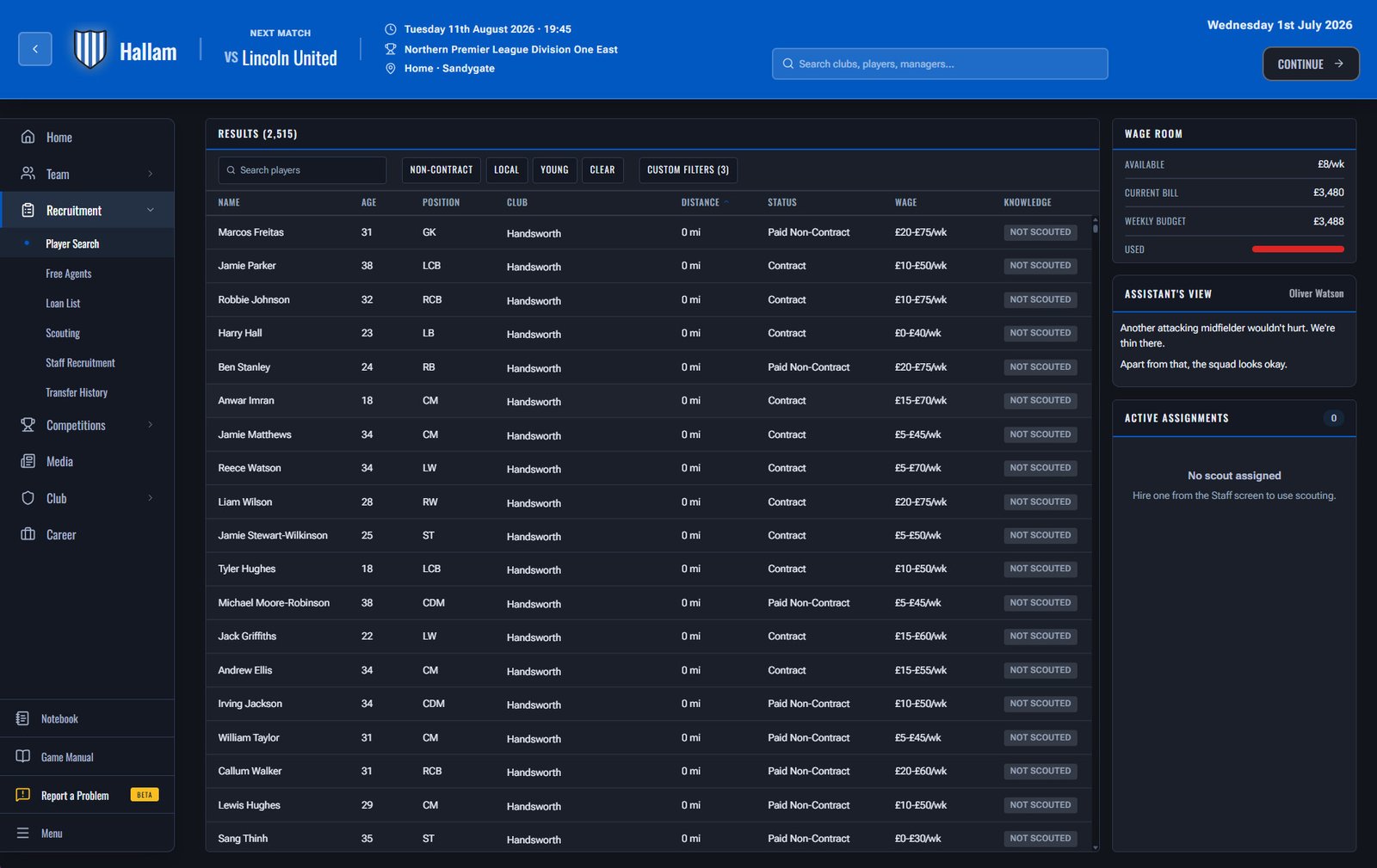
In my Hallam save, the search is showing more than 2,500 players, with the list giving you their age, position, current club, distance from the club, status and wage range.
The filters also make the list much easier to work through. You can focus on non-contract players, look locally, search for younger players or create your own filters depending on what the squad actually needs.
There's also a useful little bit of information on the right-hand side. Your available wage room is shown alongside the current wage bill, while your assistant can give you a quick view of what the squad is missing. In my case, Oliver Watson thinks another attacking midfielder wouldn't hurt.
Once you've found someone you actually want, recruitment becomes a little more involved. This is where the non-league setting starts to become even more obvious.
If a player is registered to another club, you can't simply walk in and start negotiating. The game explains that you need to give the Club Secretary seven days' written notice before you can speak to the player.
Once that window opens, you can then offer terms. If the player's club waives the notice period, the process can happen sooner, so there is still a little room for things to move differently depending on the situation. That's a small detail, but details like that help make the game feel like a non-league management game rather than a generic transfer simulator.
It also gives you another reason to keep an eye on the market. If you know you're going to need a goalkeeper in a couple of weeks, you probably don't want to wait until the day before the match to start looking.
Transfers And Loans
The game also lets you make transfer offers for players at other clubs. The process is simple: you choose the player, enter the fee you're prepared to offer and submit the bid. The selling club then has to respond before you can move on to discussions with the player.
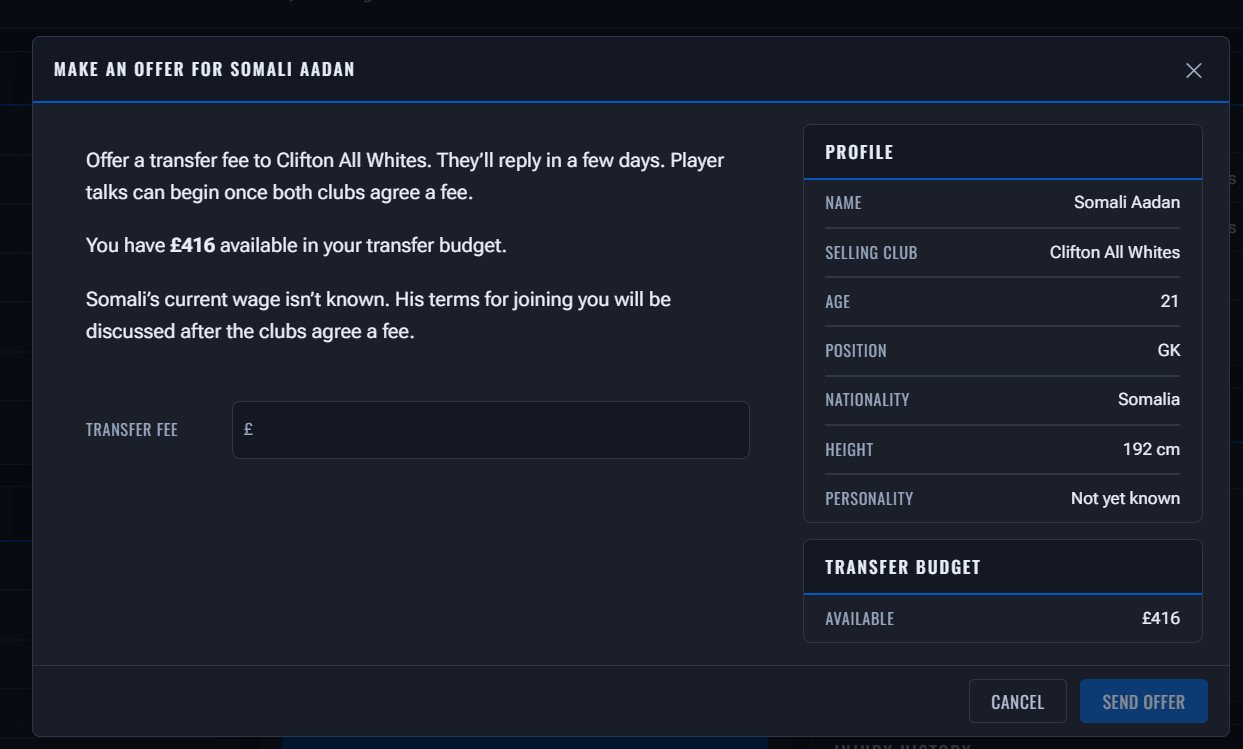
In this particular example, Hallam have just £416 available in the transfer budget. Which is, admittedly, the sort of budget where you have to think very carefully before spending £400 on anyone.
Loans work in a similar way, but with a few more choices around the terms.
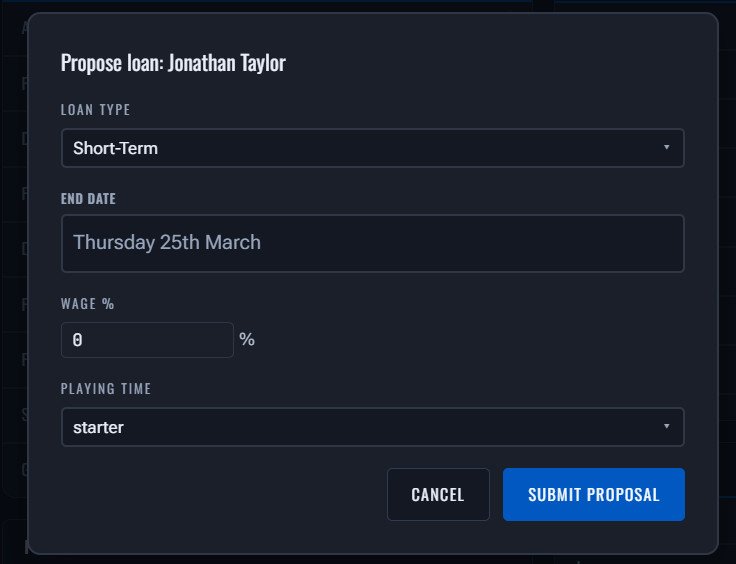
When proposing a loan, you can set the type of loan, the end date, how much of the player's wages you're willing to cover and the playing time you expect to give them.
Again, there's enough control to make the decision feel meaningful without turning the process into a complicated negotiation simulator. You're still making decisions about what you can afford and what role the player will have, but the game gets you through the process quickly.
That's probably the balance NLM is aiming for throughout the game. You're making decisions and managing a club, but you're not spending half an hour negotiating whether someone wants a £15 appearance bonus.
Matchday Commentary
This is probably the biggest difference for anyone coming from Football Manager, so it's worth spending a bit of time on.
NLM doesn't use a 3D match engine.
Instead, matches play out through written commentary, match statistics, player ratings and the decisions you make during the game.
The game presents match events through written commentary, with the score, line-ups and match statistics updating as the game progresses. You can see shots, shots on target and possession, while player ratings change as the match develops.
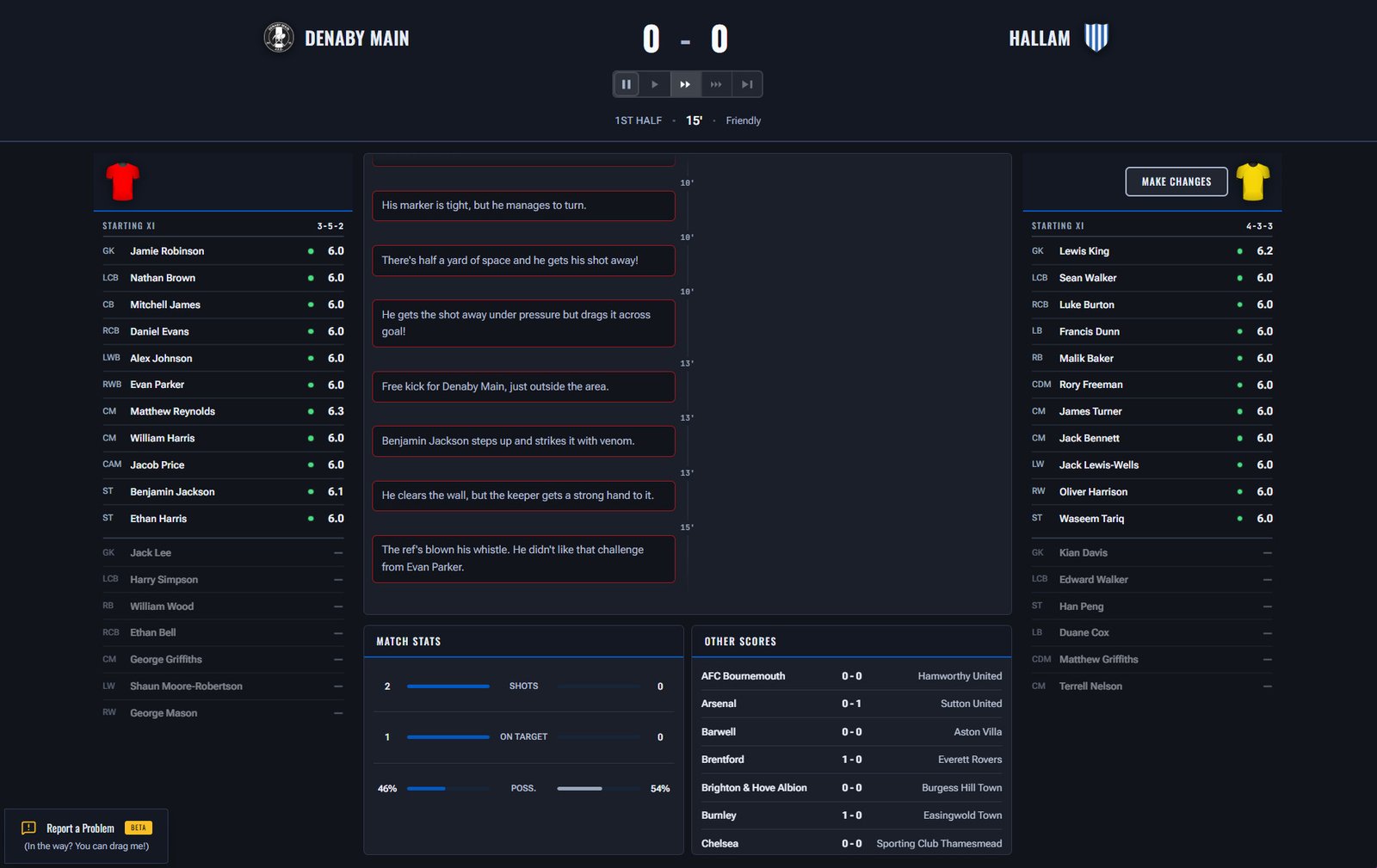
Personally, I think the commentary approach fits the simplicity of NLM. There's no 3D engine to watch players run into each other, and no shouting at your centre-back because he's decided to mark absolutely nobody.
Okay, technically, you'll probably still be shouting. You'll just be shouting at words instead.
When the game gives you the chance to make changes, you can adjust your formation, mentality and playing style, while also making substitutions from the bench.
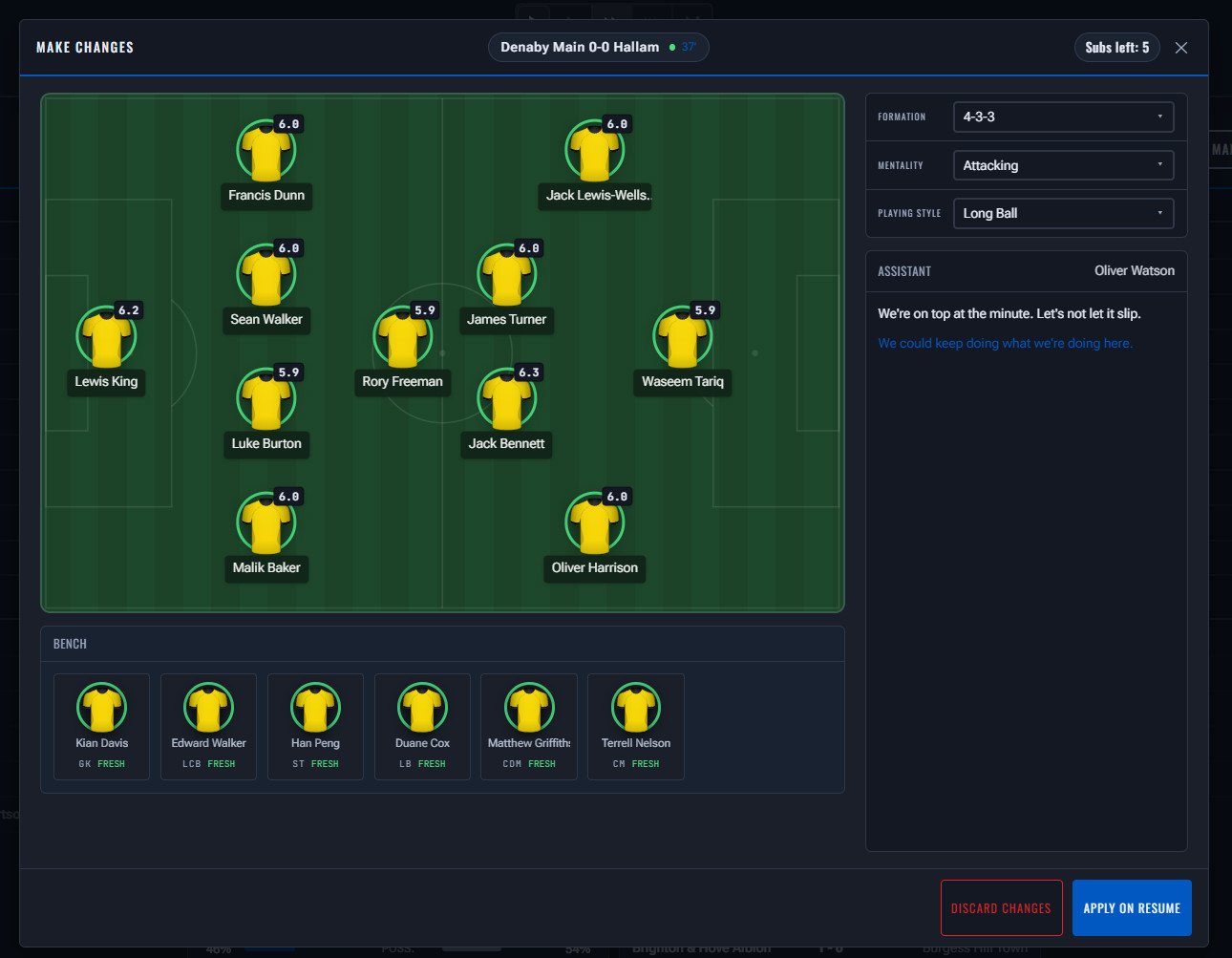
The game also gives you feedback from your assistant manager. In this case, Oliver Watson is telling me that Hallam are on top and suggesting that we keep doing what we're doing.
Which, in fairness, is exactly the sort of advice I like. Sometimes you don't need a complicated tactical breakdown. Sometimes you just need someone to say, "We're doing alright. Don't mess this up."
Match Experience
The commentary system won't be for everyone. That's probably the fairest way to put it.
If your favourite part of Football Manager is watching the 3D match engine and seeing every pass, tackle and defensive decision play out in front of you, NLM will obviously feel very different.
But I don't think the lack of a 3D engine is automatically a problem. In fact, I think the choice makes sense when you look at the rest of the game.
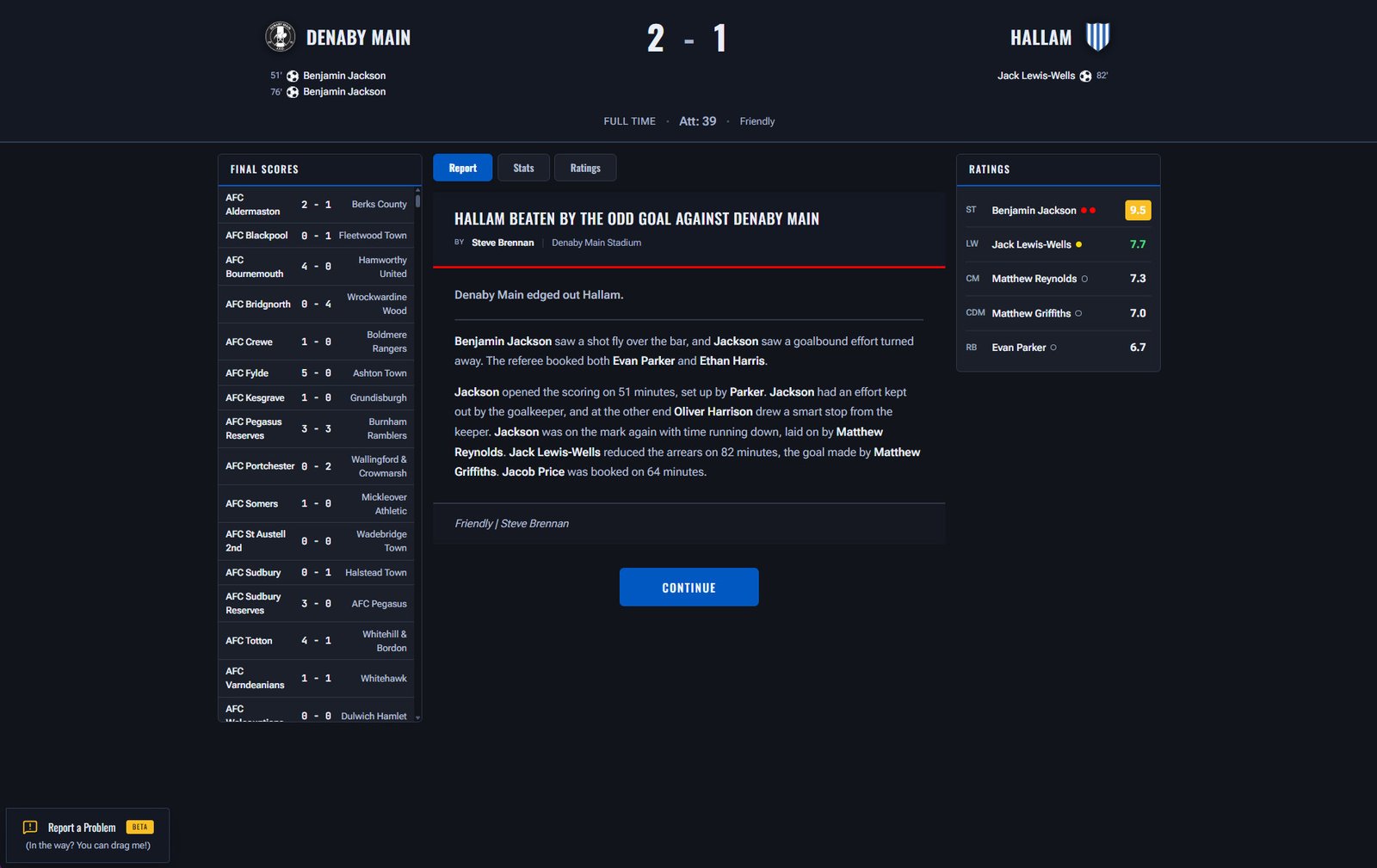
And yes, this particular match ended badly - not ideal.
The Simplicity
The simplicity isn't something that has happened by accident. After playing through the beta, this is probably the biggest thing I've taken away from NLM. The whole game feels designed around making football management easier to get into and quicker to move through.
That won't appeal to everyone, and I don't think NLM needs to appeal to everyone.
Football Manager already exists for people who want that huge level of detail. NLM doesn't need to win a feature-counting competition. From what I've played, the game is more interested in making sure the features it does have are easy to understand and actually useful.
For a non-league management game, I think that makes a lot of sense.
So, What Do I Think?
I've enjoyed my time with NLM so far, mainly because it knows what sort of game it wants to be.
Instead, NLM offers a simpler football management experience built around the important decisions.
And then you try to avoid ruining everything you've built by losing to someone you really should have beaten.
It's doing less, on purpose.
And rather than feeling like a weakness, that has become one of the most interesting things about the game for me.
NLM has now moved into Early Access, so there's obviously plenty of time for the game to grow and change. My experience comes from the beta, and some of the things I've seen will no doubt be tweaked as development continues.
That means I'm not going to pretend this is a final review or that everything I've seen is exactly how the finished game will look. Early Access is the start of another stage of development, not the end of it.
But based on the time I've spent with it so far, Non League Manager has a clear identity.
It's simpler. It's more streamlined. It keeps the focus on the decisions that matter and, most importantly, it isn't trying to be a smaller version of Football Manager.
Want to follow NLFM?
Non-League Football Manager is still in development, but you can find out more about the game on the official website or wishlist it on Steam so you don't miss the release.